
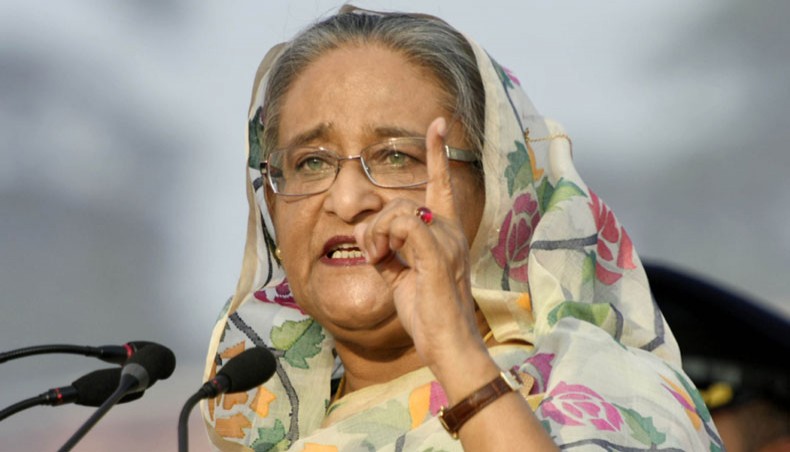
31st December 2018 marks the result of the Bangladesh elections. Sheikh Hasina will sit as the Prime Minister of Bangladesh for a third consecutive term in which she won by a landslide. The Awami league won 288 of 300 votes across the country. At first reflection, the election results are a clear indication that the people of Bangladesh are extremely happy with their Prime Minister. However, under closer inspection, the feeling in Bangladesh paints a worrying picture of a country which considers itself a democratic country but is flirting with dictatorship. Many within the country including the main opposition party (BNP) do not agree with the result of the election. So, what is going on in Bangladesh?
Over the past couple of years there have been several reports of voting irregularities, abductions, intimidation, political arrest, extrajudicial killings, torture, press restriction and many others crimes which have been reported by various human rights groups and NGO.
Brief History
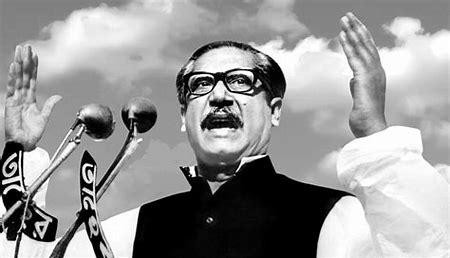
Since 1971, Bangladesh (Former East Pakistan) gained its independence from Pakistan (West Pakistan), after a bloody war which resulted in 3 million Bangladeshi’s being raped or murdered. Bangladesh sailed its own sails lead by their fearless leader, Sheikh Mujibur Rahman (Father of the Nation). Within four years of leading his country, Sheikh Mujibur Rahman and the rest of his family members were murdered by the military. Sheikh Mujib was survived by his two daughters who were in Germany at the time of the assassination which forced them in to exile until their return in the early nineties. The army had taken control and it was not too long before Zia-Ur-Rehman, an army officer turned politician, would become prime minister of Bangladesh. Four years later Zia, would suffer the same fate as Mujibur Rahman, a secondary military coup would lead to his death.
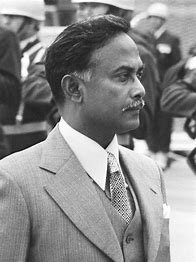
Feuding Family Dynasties:
Both family dynasties have been feuding since the country’s inception. Both Sheikh Hasina and Khaleda Zia (Zia-ur-Rehman wife) have been Prime Ministers of Bangladesh. Both parties have used their position in power to diminish the power of the other, through killings and murders. However, the endemic violence of two waring families has spread across the country with people bitterly divided between both parties. Over the years, thousands of Bangladeshis have been either killed or murdered in the name of two families.
Political Disappearances.
Odhikar, a Dhaka based human rights group have reported 402 people being victim to political disappearances and extrajudicial killings. Most of the victims are those who are opposed, critical or a threat to the current regime. In 2012, prominent opposition party figure, Ilyas Ali was kidnaped outside his home along with his chauffeur, his body has not been found, and the government have refused to accept any part in his disappearance. In another case, Aminul Islam a member of a trade unionist disappeared; however, his body was found. The post mortem results showed several bruises on his body and it was concluded that he was tortured. Yet again the Awami League government have distant themselves from this incident.
United Nations and Human Rights Watch have been extremely critical of Sheikh Hasina’s government role in these enforced disappearances. However, Awami League have been quick to distance themselves from these allegations. RAB (Rapid Action Batallion) have been heavily linked to these dissapearances.
The RAB was created in 2004 as a counter-terrorism unit to tackle Islamic terrorism in Bangladesh. Over the years they have been used as an important tool by the government to carry out ‘hits’. Wiki-leaks revealed a radio-interview on a Swedish Radio, in which a RAB Officer would carry out killings on behalf of the government. If they believe a proposed ‘suspect’ was on their list but the evidence would not warrant a conviction they would either kill or make the said individuals disappear.
Media
The pre-requisite to any democracy is the freedom to press. The press in theory plays a critical role in the functioning of any democracy, in that they keep the executive in check so that the public have a fair and consistent representation of the government’s successes and failings. However, in reality this is a far cry in many democratic countries. Bangladesh like many other countries has played a pivotal role in silencing free-media. Although, in recent years, media has been heavily silenced, with growing concerns from authors, that if they were to report openly against the government, they would suffer grave consequences.
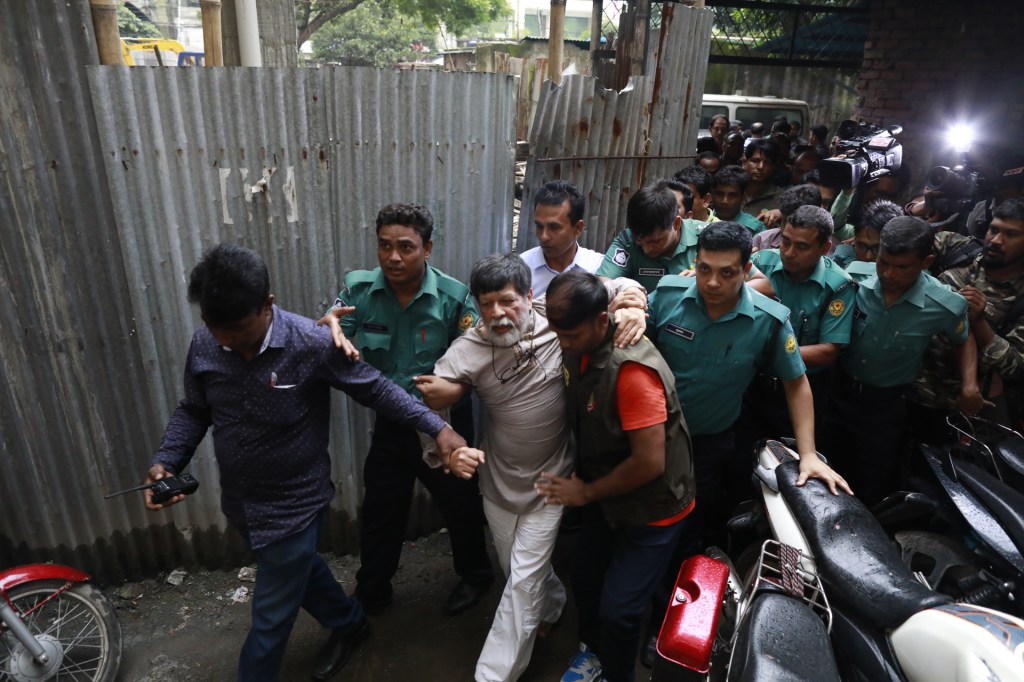
Shahidul Alam a prominent photo journalist who has been an open critic of the Awami League government was arrested and tortured by the police authorities for 90 days. Sheikh Hasina criticized the tortured journalist by referring to him as a mad man. Amnesty International have requested that the government release Shahidul Alam without any charges.
By her own son’s admission, he once responded to a journalist, claiming his mother considered it a badge of honor to be compared to authoritarian dictator Staling.
Bangladesh ranks 146th in the Reporters Without Borders world press freedom index, behind countries such as Myanmar, Cambodia and South Sudan. It has slipped from 118th when the index began in 2002.
Sheikh Hasina’s government has approved the Digital Security Act which gives the government powers to arrest without warrant. Amnesty International have expressed their concerns on this new legislation as a ‘dangerous restrictions on freedom of expression’. The act enables judges to enforce sentences of up 10 years for any information which is considered aggressive or frightening, Surely, this part of the legislation is subjective to the authority which interprets any publishing content. Would it not open a floodgate of arresting any one and everyone who publishes anything which is anti-Hasina.
Student Protest leads to Death!!!
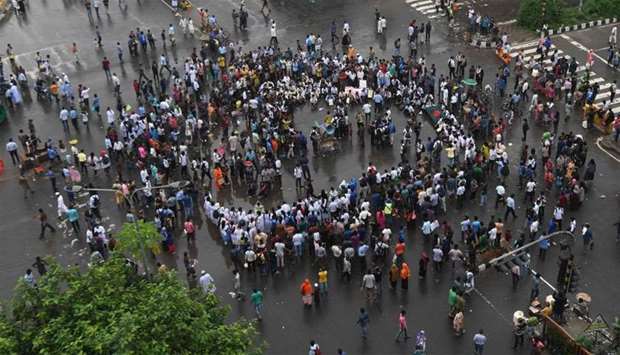
In July 2018, university and school student’s protests led to the streets to demand road safety after two students were killed by buses. Credible witnesses who were present saw students from the Awami-League wing attacking protestors with bats and machetes. Police had also arrested student protestors after the planned Awami League student-wing violence.
**********************************Rohingya***************************************
Whilst the international community has condemned the Bangladeshi government of their treatment of Rohingyans. Bangladesh was the only country fully committed to taking one million Rohingyan refugees. The Bangladeshi government are still being provided indefinite security for one million Rohignyan refugees whilst also taking on the responsibility of resettling them across the country
International Concerns:
The European union, Switzerland and Norway have expressed their concern on all of the above-mentioned issues including labor laws. The United States government has also called for free and fair elections during the lead up to the 2018 general elections and criticized the crackdown of student protest.
What now for Bangladesh…
Whilst you cannot deny Sheikh Hasina’s economical success you cannot help but acknowledge the growing discontent within the country of her Iron-Fist approach which has been likened to the likes of dictators like Stalin.
Bangladesh like many other commonwealth countries are still in their infancy to democracy so you are expected to find lack of resources and a mismanagement of services. However, the corruption and human rights violations have reached critical in Bangladesh. A reflection of this is the electoral turn-out for last year’s election. Dhaka has the highest number of Facebook users of any capital city in the world yet many young Bangladeshi’s who are currently discontent with the government avoided using Facebook in fear that they would be imprisoned, tortured and killed by Hasina’s government.
The other issue which plagues sub-continent politics is family dynasties. In India we have the Gandhi family which have been running strong since the birth of mother India, in Pakistan you have the Bhutto family, and in Bangladesh we have the battling Zia and Rahman family.
Bangladesh requires a fresh face from both parties who are not associated with the family or maybe a third political party which is not associated with this family feud. The people of Pakistan have recently elected PTI (Pakistan Tahrikeh Insaaf), led by their charismatic leader Imran Khan who defeated the popular PPP and PML-N party who have stronghold of Pakistani politics for over 50 years. Shouldn’t the same work for Bangladesh?
Military intervention appears to be an on-going issue in both Pakistan and Bangladesh. Both countries written constitution enables the military to intervene when they feel the government is not acting within its mandate. Over the years, military intervention may have had short term success; however, closer observation indicates that the military causes more problems than good. For one, we have military offices taking official post (Zia-Ul-Haq, Mohammed Ershad and Parves Musharaf) without ever being elected and it secondly, it delays the democratic process which in turn leads to political and economic uncertainty. A proposal to have the military intervention limited would benefit the country and prosper the democracy.
P*Disclaimer- I have no links or support to any political party in Bangladesh. This just an on observation of Bangladeshi politics from my view.
 El-Hajj Mohammed X- Hajj Blog
Well done brother. Very well said and explained. Keep up the good work. Looking forward to the next blog 😊🙌🏼
LikeLike
Well written and a true reflection of the many unnoticed crimes committed in bangladesh.
A true shame such a wonderful country with great potential of being beautiful tourist attraction and a country that us natives should lookg forward to going to… but politics have such a strong hold it has trickled down to community where followers of each party are willing to kill each other to defend their pm.
LikeLike
Interesting read and very well articulated of the facts of Bangladesh politics. The country desperately needs new generation policies.
LikeLike