Islamophobia: The right to offend, the right to be offended? After the tragic events of Christchurch where do we draw the line!!!

I want to start this blog off by remembering our children, brother and sisters who were martyred in Christchurch mosque before Jummah Salah (Friday Prayers).  Those who have died in Wudhu (state of ablution) will benefit greatly in the hereafter.
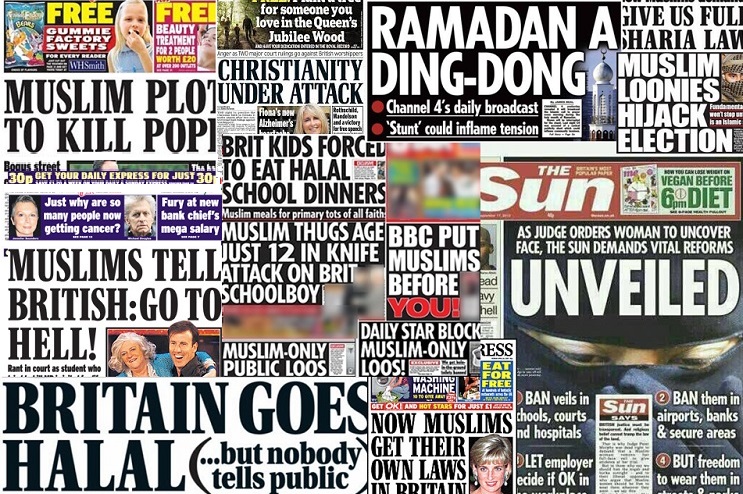
The rise of Islamophobia and racial intolerance have spiked across the globe since 9/11. I don’t think it’s necessary to go in to the nuances of every incident that have occurred post 9/11. A number of issues can be identified for the rise of hate crime. Firstly, western invasion in Arab lands to tackle the war on terror and the other agenda is to disable ‘autocratic’ governments which are not compatible with Western geo-politics. A direct result of war-torn countries leads to fear of life, and a fear losing your life, results in mass migration to safer countries. The third and most important rise of hate crime has been heavily supported by the work of media propaganda and social media demagogues. The media has worked tirelessly in demonizing ethnic groups and Islam in the west which has lead to where we are today.

The endemic rise of right-wing fanaticism has spread across the globe. The support of the media and successive governments have stoked the flames of a growing fire which has spread rapidly. Right- wing political groups has gained huge popularity across Europe in recent times, the UK itself is heading towards Brexit where people have cited immigration as a common reason to leave the EU, and the successful election of Trump was the proverbial cherry on top.

A spate of attacks across Europe and America are growing concerns for the Muslim communities. It was only two years ago that a mass shooting incident occurred in a mosque in Quebec where 6 muslims were shot at by a white supremacist. In Norway, Anders Breivik (Neo-Nazi) killed 8 in an Arson attack and then went on a shooting spree killing close to 80 people in defiance of multi-culturalism and Islamification of Europe.

In the UK, we have seen several incidents of violence towards the muslim community, most notable,  Darren Osborne driving his van in to a bunch of worshipers outside a mosque in Finsbury Mosque. There are many other attacks we can mention but this would require further scrutiny. Nevertheless, the Home Office latest reports on Hate Crime highlighted a 40 percent rise in religious hate-crime from 2016/2017 to 2017/2018.

This recent Christchurch massacre is the epitome of prevalent right-wing terrorism. Prevent an initiative created by the UK Government reported a 36 percent rise in right-wing fanaticism in 2017/18. So, this attack was of no surprise.

The right to Offend?

Freedom of speech is the by-product of democracy. Each and everyone of us has the right to have their freedom of speech protected. However, the question that should be asked, how far do we go before we have the right to offend?  If, you are advocating the right to offend? How far does offence go when your words become a risk to the public?

Why Tommy Robinson?

After the recent events in Christchurch, it is evident that the right to offend, when it ends up in the the wrong hands, can have disastrous effects. Tommy Robinson shot to fame in 2008 after a group of Anjem Chaudary supporters (A fringe minority) started burning poppies at a returning home parade for soldiers of Luton. The likes of Tommy Robinson have used his platform to aggressively attack muslims and Islam. Tommy set up the English Defence League (EDL) in 2008, and has gained popularity amongst deprived working-class communities. Tommy in his own admission has profited heavily from Islamophobia and continues to gain popularity with his anti-islam rhetoric. Tommy understands people who have genuine concerns and directs these concerns in to hate rather than dealing with solutions.

*On the topic of the Islamophobia industry. University of Berkeley found that 208 million dollars was invested between 2008-2013 in to Islamophobia. Am sure that number has probably doubled since 2013.

Going back to Anders Breivik. Prior to his infamous terrorist attack in 2011, Anders Breivik had strong links to the EDL. He also admitted to being inspired by the EDL and also wanted to join an EDL march in Bradford prior to his own demolition job. There were also EDL Facebook forums that he actively participated in. Yet Breivik is yet to show any remorse for his actions and was evidently happy in court when he met the victims families in court.

Brenton Tharrant, the Christchurch terrorist himself was inspired by Ander’s Breivik. Brenton met with his Idol Breivik as cited in his 74-page manifesto, prior to carrying out his horrific act. All roads in this case lead to Tommy Robinson. Tommy Robinson’s words have had an impact, granted he has not acted out his word, but his words alone have had domino effect, looking at the the Norway and Christchurch attacks. So, should Tommy be held responsible?

The same can be said regarding Anjem Choudhary. Both Anjem and Tommy are two cheeks of the same ass.

The Media

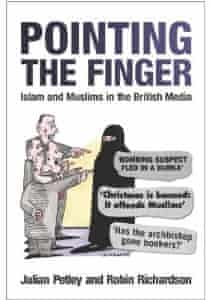
The mainstream media is as responsible as the extremist. In a democracy, the freedom to press is an absolute right to any democracy, however, the media has lost its way in the framework they operate within. The concept of freedom to press was to ensure that true stories are told and the public are kept informed freely from parliamentary and government bias. Third world countries are dictated by  autocratic governments, however, in this country, the mainstream media dictates are political views.

How much influence does the media have? Well in 1994, the Sun Newspaper (the most popular paper in the UK) had sensationalized that they had won the general election. Going as far as the 1970’s, any political party which has been supported by the Sun has gone on to win the general election. How easy would it be for the Sun Newspaper to push forward a negative agenda? The answer is quite simple…

Have the media flirted with the right-wing nationalism in their attack against semetic religions? Well the answer is yes. During the early 30’s, Lord Rothermere the owner of the immigrant and race bashing newspaper was an advocate of Hitler and openly supported the attacks of Jews that lived in Germany. So, it should be of little surprise when we see these papers demonising muslims or Islam.

Neil Basu, chief of counter-terrorism in the United Kingdom has openly criticized the main-stream media for its role in radicalizing right-wing terrorism. Basu was particularly critical of the Daily Mail and the Sun coverage of the Christchurch video shooting, but yet the same mainstream-media had been critical of social media sites, for their failure to monitor the uploading of Islamic terrorism videos.

Quite often, you read sound bites of right-wing fanatics being labelled ‘lonely wolf, victims of some sorts, innocent angelic kid that lead them to doing x,y and z etc.…. The mainstream media have tried to legitamise reasoning for right-wing fanaticism. However, the same reasoning is not provided to fanatics who propagate attacks in the name of ‘Islam’. Not for one minute would I expect the media to defend these terrorists. However, the hypocrisy and double standards of the mainstream media operates within its framework.
The right to be offended?

When the right to offend is so easily appropriated the right to be offended can be easily crossed. When you incite hatred and demonize communities it doesn’t take too long for people to rely on journalistic writings, to act upon bigotry and hatred.

However, how far does the right to be offended go before its actions have a tragic consequence. Does is start with conversations, the right to insult, the rick to mock, the right to protest, the right to blog, the right to incite hatred? Or the right to act like we all saw in Christchurch?

The Solution:
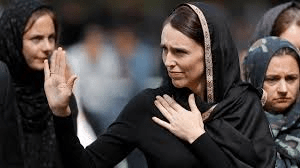
The premiere of New Zealand in unity with the Muslim com
munity in mourning

Well astonishingly for the first time we have seen the word ‘terrorist’ being used inclusively for the first time. For the first time, as far as I can remember, the word terrorist has been labelled to a non-muslim. The premiere of New Zealand, Jacinda Adern, a beacon of light for the global unity, stood with the muslim community and mourned with us. Not only did she mourn, she condemned the vile actions of Brendon Tarrant, and labelled him a terrorist.

Considering the huge steps taken by Jacinda, I think the media should also take a stronger position in condemning all forms of terrorism. However, if they fail to do so, a stronger position should be taken hold the media accountable.  A regulatory body with the power to enforce huge fines and potential criminal prosecutions would be the most beneficial way in dealing with the media should they continue to stoke the flames of Islamophobia.

Hate preachers like Tommy Robinson and Anjem Chaudary who are guilty of radicalizing others, stricter guidelines should be put in place to monitor their social media platforms, disable their social media in the event they are pushing the boundaries, or impose prosecutions to those who choose to purposely incite bigotry, racism and islamophobia through violence.

Hopefully we can use the events of Christchurch to unite communities…
Istanbul – A 5 day journey across the fortress city.


Napoleon once famously stated ‘If the world was a single state, Istanbul would be the capital’. Napoleon’s praise for the city is a reflection of what millions think of this spectacular city today once they have made the visit.

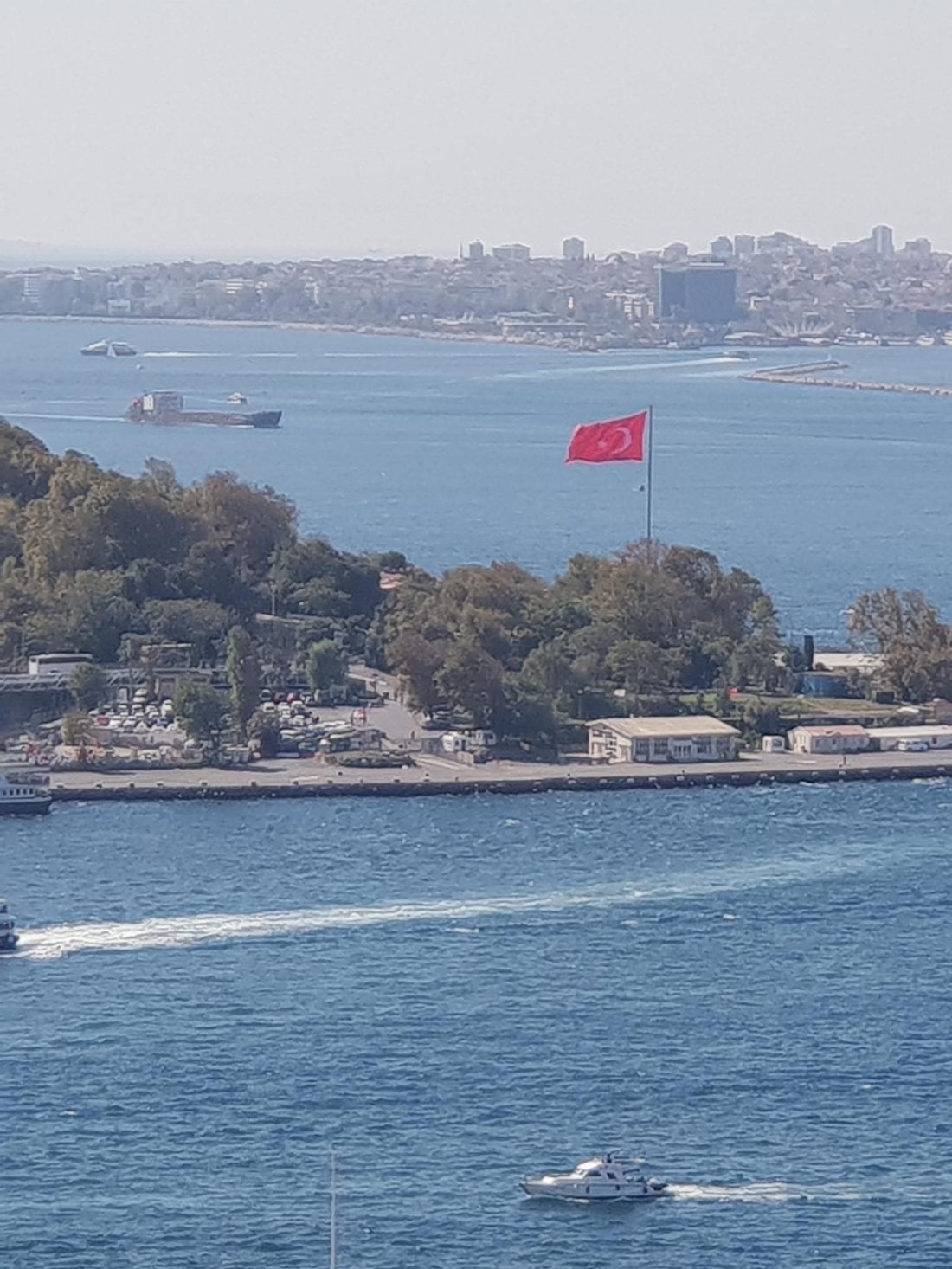
Turkey is strategically based between three continents (Europe, Africa and Arabia & Asia), whilst also sharing the Mediterranean Sea, Aegean and Black sea. History teaches us that Istanbul has been a military and economical fortress for some of the mightiest empires in history. The Roman Empire, Byzantines and the Ottomans have used Istanbul as their hub and have profited hugely from this city in invading other territories. Whosoever, holds the key to the Bosphurus, owns the world. Constantinople (Istanbul) was the second capital of the mighty Roman Empire.

Each empire has left its mark on this great city. The Roman presence over the city is quite evident; the remnants of Roman cobbled roads, temples and churches can be found across city. However, the Ottoman influence in the past 500 years has left its own mark on the city.

The city of Istanbul city sits at the bed of the Bosphurus, with the river separating Istanbul across two continents, Europe and Asia. The only city in the world to be separated by two continents. A 20-minute boat trip from Eminonu Station takes you from Europe Istanbul to Asia Istanbul. A single fair will cost 7 liras which is close to 1 British pounds. The city is also known for the 7 hills which sits within the walls of the city, with each hill representing a famous mosque, university or other historical structure. Very similar to Rome.

Sultan Ahmet Mosque:
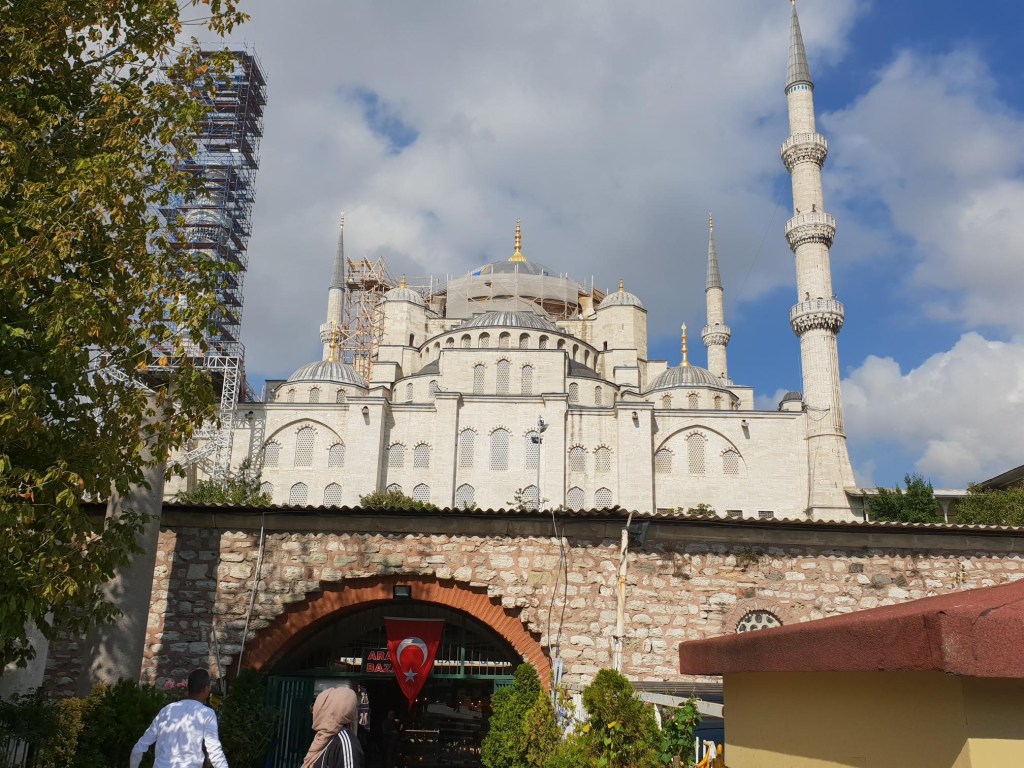
Referred to as the Blue mosque. Completed in 16th Century by Sultan Ahmet, the sultan ordered the making of the mosque to reassert Ottoman dominance across the city of Istanbul. The mosque imposes itself across the hills of Istanbul and is considered the most iconic sight of Turkey. The interior design  is of carefully designed Islamic art across the ceiling and walls, the walls naturally light up giving it a blue effect. The mosque itself has 5 domes and 6 minarets which covers the outer structure of the mosque. The only other mosque with more minarets is the holy mosque in Makkah. Opposite the Sultan Ahmet sits the Hagia Sophia.

A view of the Blue Mosque from the Astara Bazaar entrance
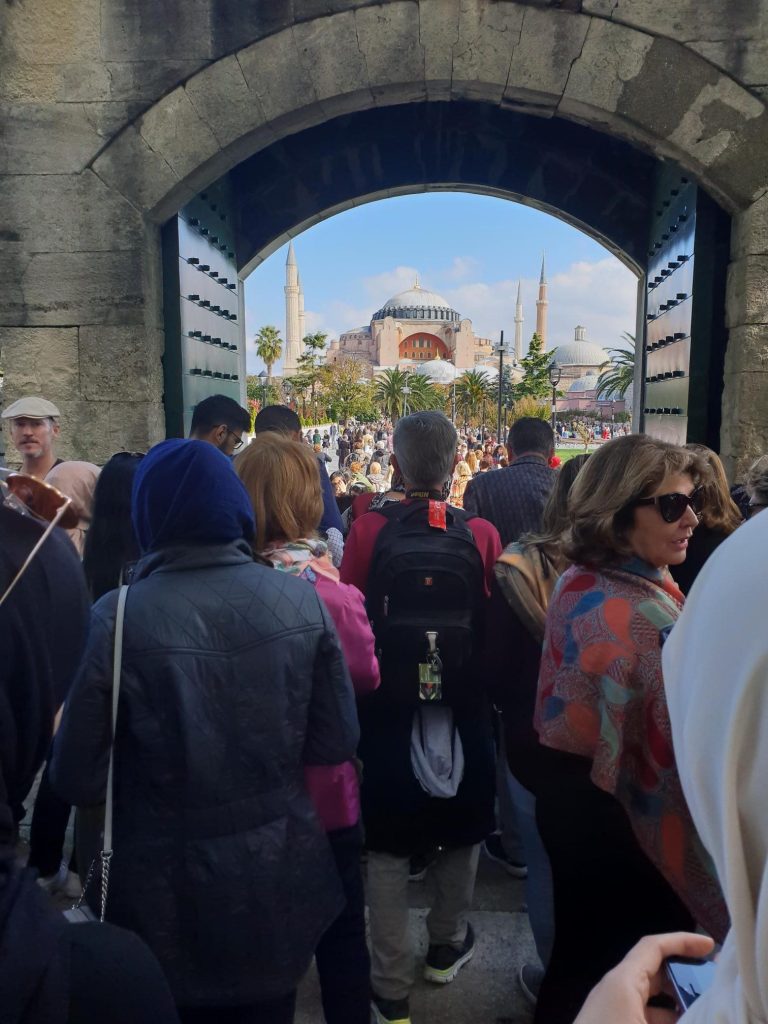
A view of the Haggia Sophiafrom the gates of the Blue Mosque

This may sound cliché; my hotel was situated within a two-minute walk from the blue mosque. Our route to the blue mosque involved us passing through Arasta Bazaar. The Arasta bazaar is a parade of 40 picturesque shops consisting of Turkish sweet shops, spice stores, traditional Turkish cafes, clothes and souvenirs shops. The Bazar itself was previously a horse stable for Ottoman Horses.

Hagia Sophia:
Upon leaving the Sultan Ahmet Mosque a gate separates you from the court yard which leads to the Hagia Sophia (approximately a two-minute mosque). The residential court yard is used to soak-up some of the breath-taking views of the two mosques whilst also presenting you the opportunity to take some fantastic shots of both mosques. Istanbul is a city covered with mysticism but you can genuinely feel a positive energy between both mosques. Was it a hallucination or the placebo effect in full force?

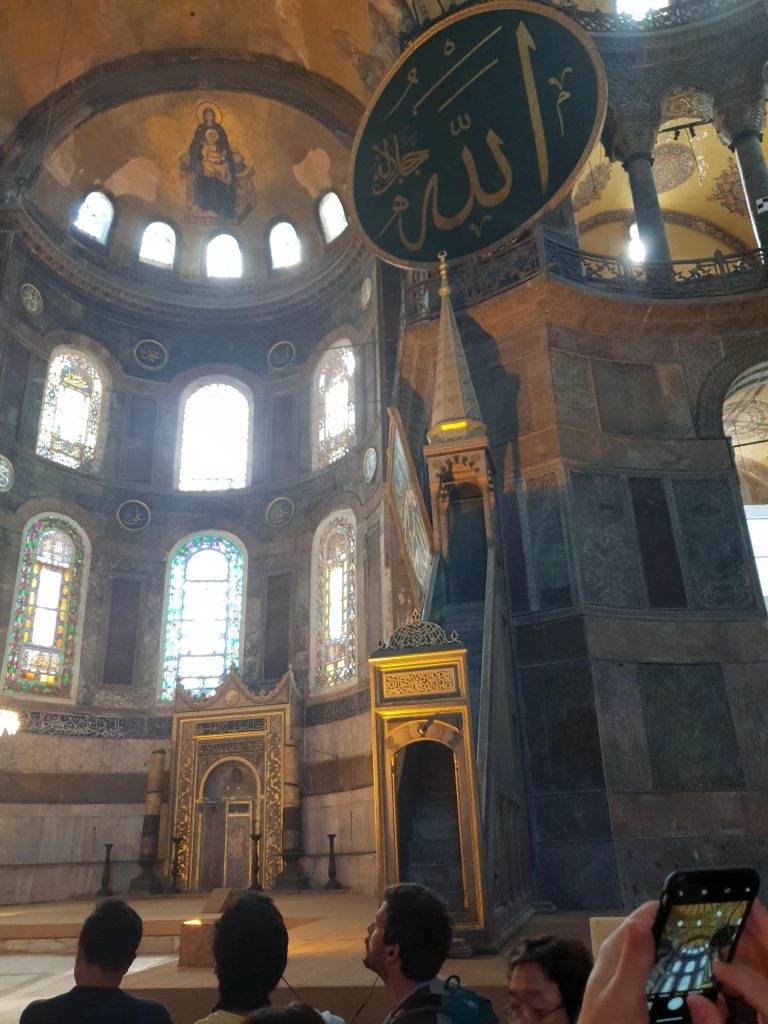
Top left of the domed ceiling of the Virgin Mary and a Circle Tablet of Allah (SWT) name, several other circled tablets can be found in the main hall 
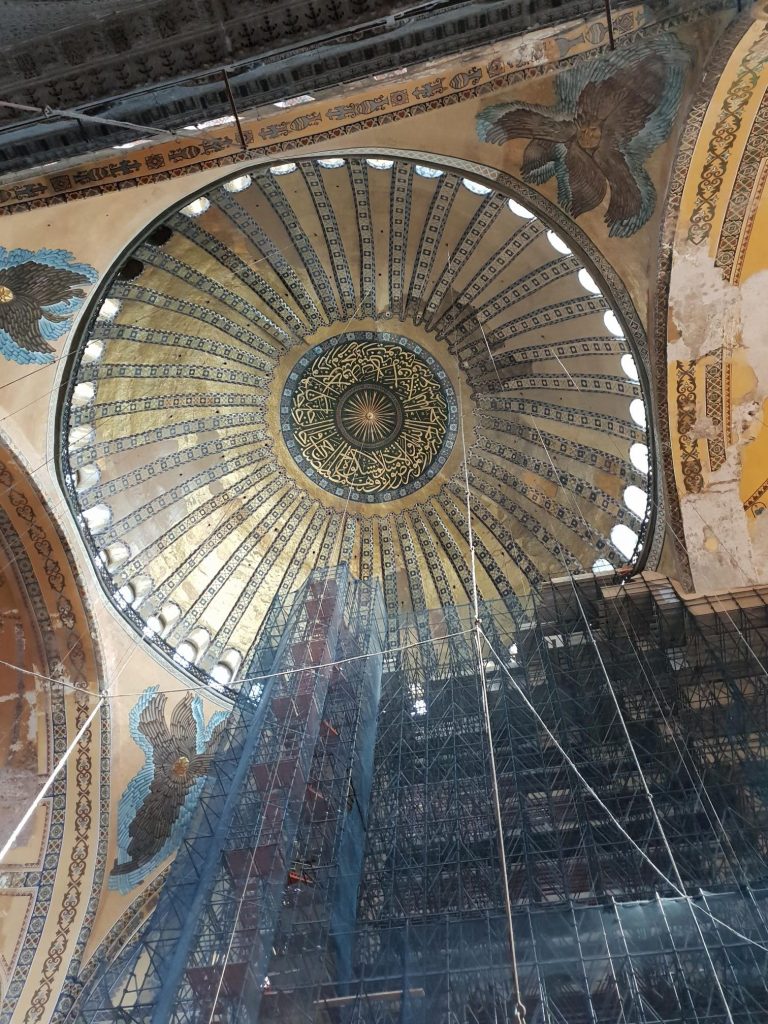
Islamic art on the ceiling

With its four minarets and its huge dome that covers the circumference of the building. The Hagia Sophia demands it presence to its equal, Sultan Ahmet mosque. Much simpler in its design compared to Sultan Ahmet mosque; however, still an amazing sight.

Created in 300 BC, the Hagia Sophia was initially an Eastern-Orthodox church. However, centuries later, the Orthodox church converted to a Cathedral; several centuries later under the rule of the Ottoman’s, the Hagia Sophia was converted to a mosque.

Roof not a Dome?
Up until the 16th century, the Hagia Sophia was a traditional medieval European church. However, the Ottomans converted the roof in to a dome and gave its own Ottoman identity.

Neither a mosque or church…
The founder father of the Republic of Turkey, Mustafa Kemal Attarturk, ordered the Hagia Sophia to be preserved as a museum rather than a place of worship. Christianity, Islam or Secularism take your pick?

Once you enter the grand hall of the mosque, centuries of Christ-o-Islamic history can be felt in every slab, brick, art, colour and architecture which decorates the two-tiered gallery of worship. Several domes are embossed across the ceiling with fine Islamic art; at the foot of the dome, a perfectly drawn picture of the Virgin and Child is drawn. Other such pictures of baby Christ and the Virgin Mary can be found on the second floor. The corner of each pillar is covered by huge round tablets detailing the name of Allah(SWT), Muhammad (PBUH) and his Sahabas (apostles). The colours of all the ceilings were crowned in gold, giving it a strong sense of royalty across the mosque. One could imagine that the sultan and his closes advisors would have been regular visitors during their rule.

The walk way leading to the second floor takes you back a few centuries. Dark walk ways lit with the smallest flames and huge pebbled stones on all fours greeting you to the second floor. The second-tier gallery brings you closer to the art work so that you can really appreciate the artist craftsmanship. Views of the Blue Mosque can be seen through the mini-windows that are perfectly positioned opposite Sultan Ahmet mosque.

Top Kapi Palace Museum:

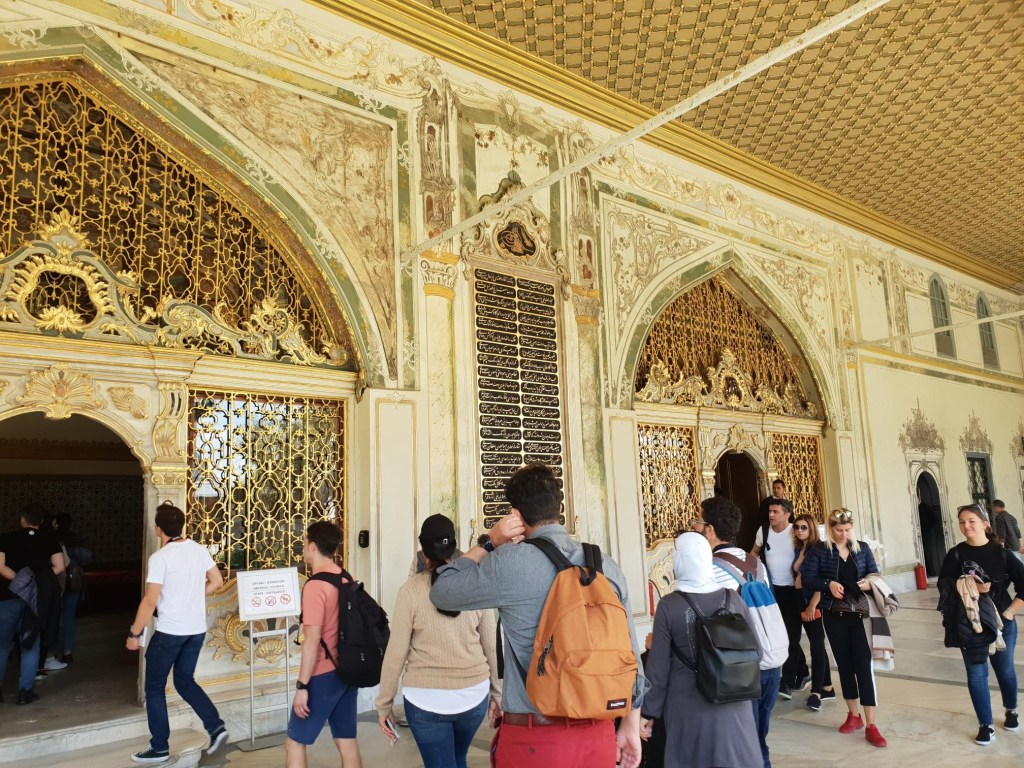
Top Kapi Castle was the home of the Sultan and head-quarters of the Ottoman government. A lot of the Ottoman Empire and it overseas territories would have been discussed within the confines of these walls. The Castle is beautifully designed from the palace quarters, gardens and court yards. A lot of detail has gone in to designing this grandeur palace. A grand gate guards you from the palace. Before the guarded gates were to detract intruders, now the guarded gates are used to stop people entering who don’t have tickets.

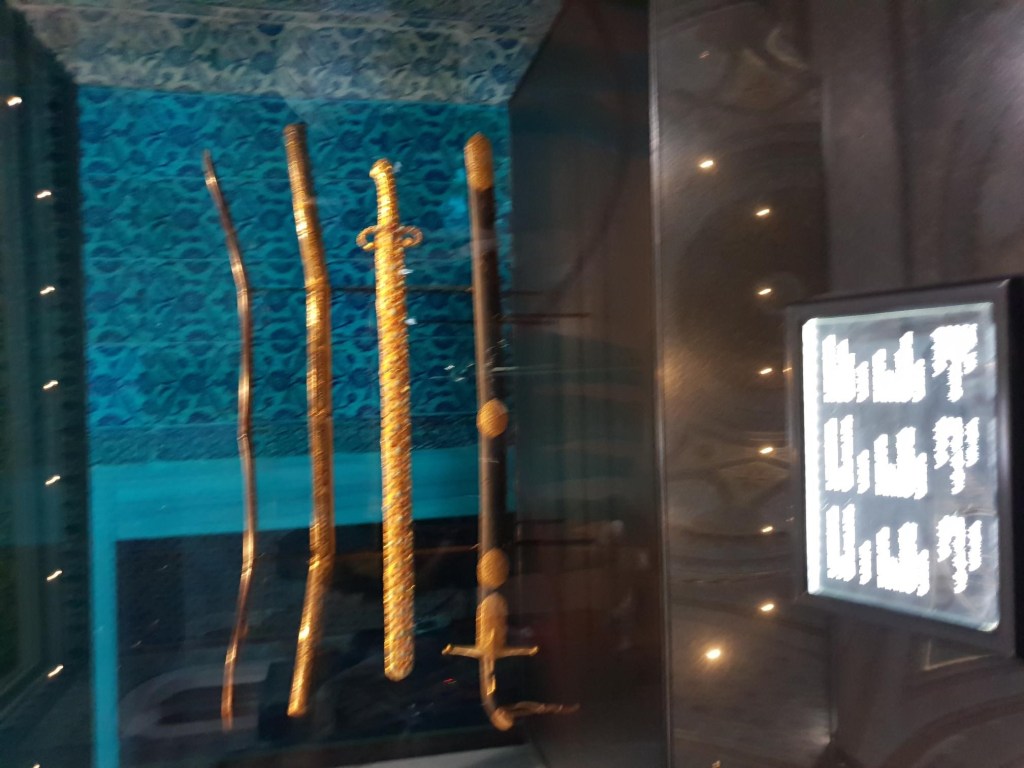
A lot of the palace displays where the Sultan and his governors would spend most of their days. There are also building displaying the history of the Ottomans; art, fine weaponry and Islamic relics.

There is a huge Sufi influence in Turkey and there is no exception to Istanbul. There is a demand for keeping relics. A lot of people buy in to some of the relics on display but I just couldn’t get my head around crying, seeing an alleged staff that belonged to the prophet Musa (PBUH), was it really his staff. Is the staff more important or his word?

The governors room where the Sultan’s advisor’s would have their meetings.

Grand Bazar

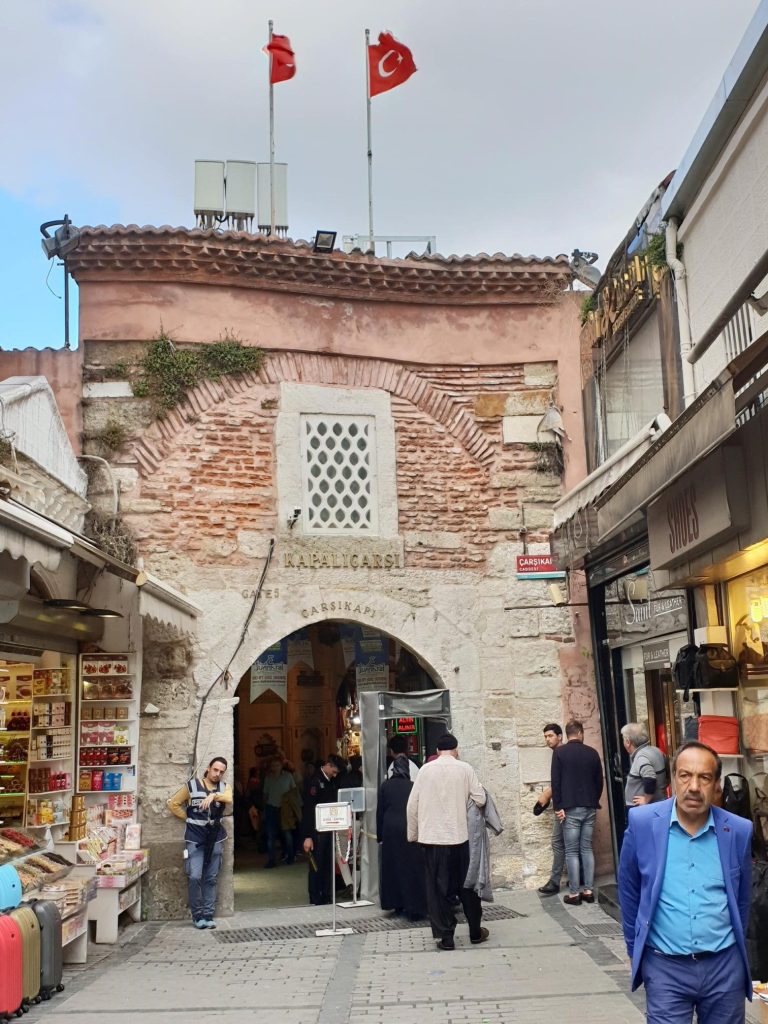
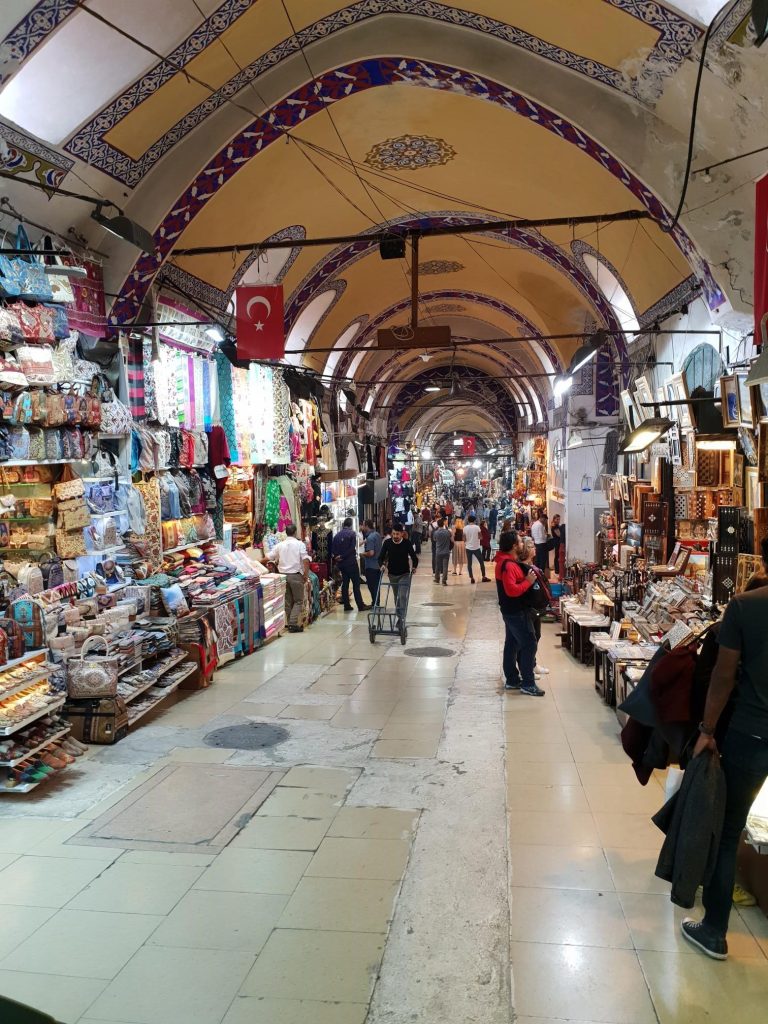
Two or Three tram stops from the Sultan Ahmet leads you to the Grand Bazaar. One of the largest and oldest opened markets in the world. The Grand Bazar has over 4000 shops covering across 61 streets. A lot of the architectural design has been preserved and it has the presence of a place which serves its place in history. Everything and anything can be brought in the Grand Bazaar. Rich in colour sulked up in every day Turkish trade, with over 500, 000 visitors a day, the overwhelming nature of the market can easily make you spend hours exploring.

The Grand Bazar Entrance
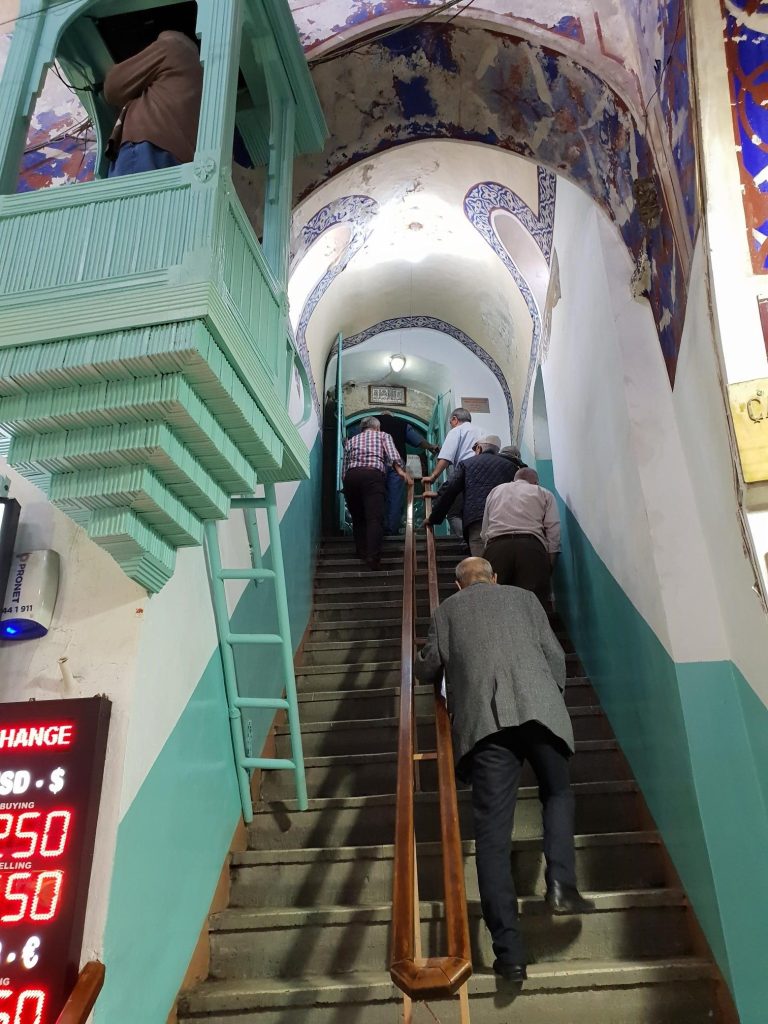
The Prayer Hall stairs and the Ikama’s prayer pulpit

With loads of roads, rows and isles (little and small) within the market, it is very easy to get lost in the Bazaar. Once you are lost it can feel like a mirage, all the shops and isles can look the same, even the most vigilant have fallen victim to loosing themselves within the confines market.

*If you get a chance, try to visit the mosque within the bazaar, am sure there are more than a couple. One mosque I came across, had stairs leaning out in to the market, supporting a small hut with a mic. I saw a man skilfully making his way up the steps, he turned out to be the Muadhim (caller for prayer), he sounded out the Adhaan (call for prayer). There was another small unassuming stair’s next to the Muadhim’s stage, the narrow steps lead to a spacious two-tiered mosque.

One of the many row’s of the Grand Bazaar

Spice Bazar

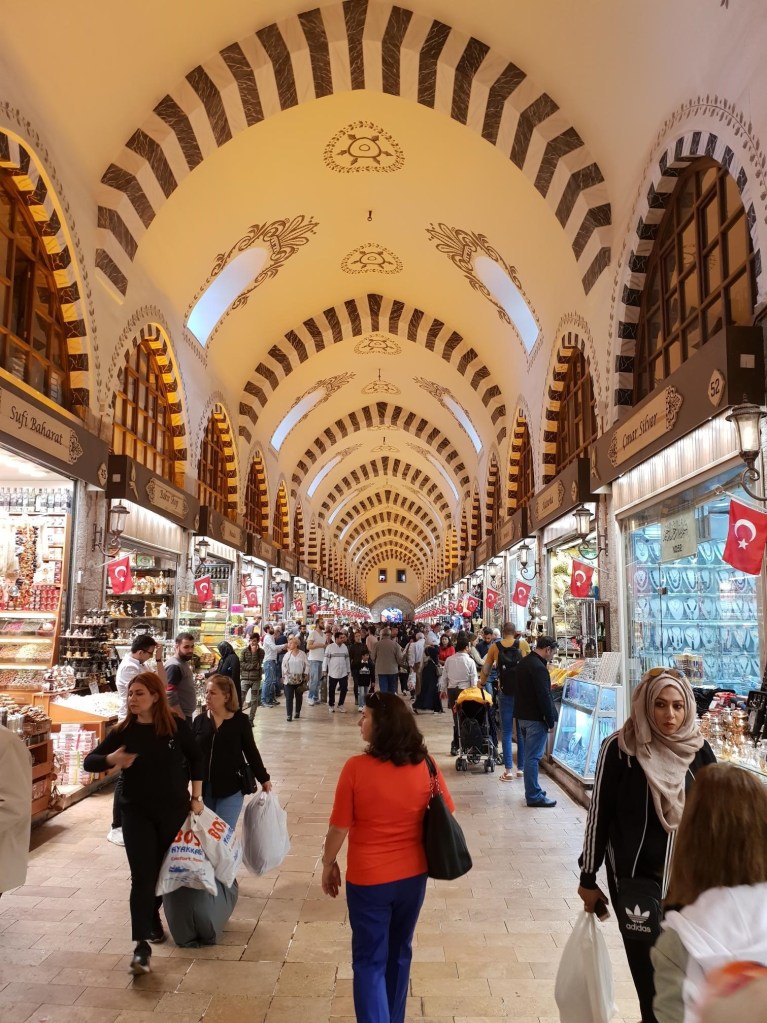
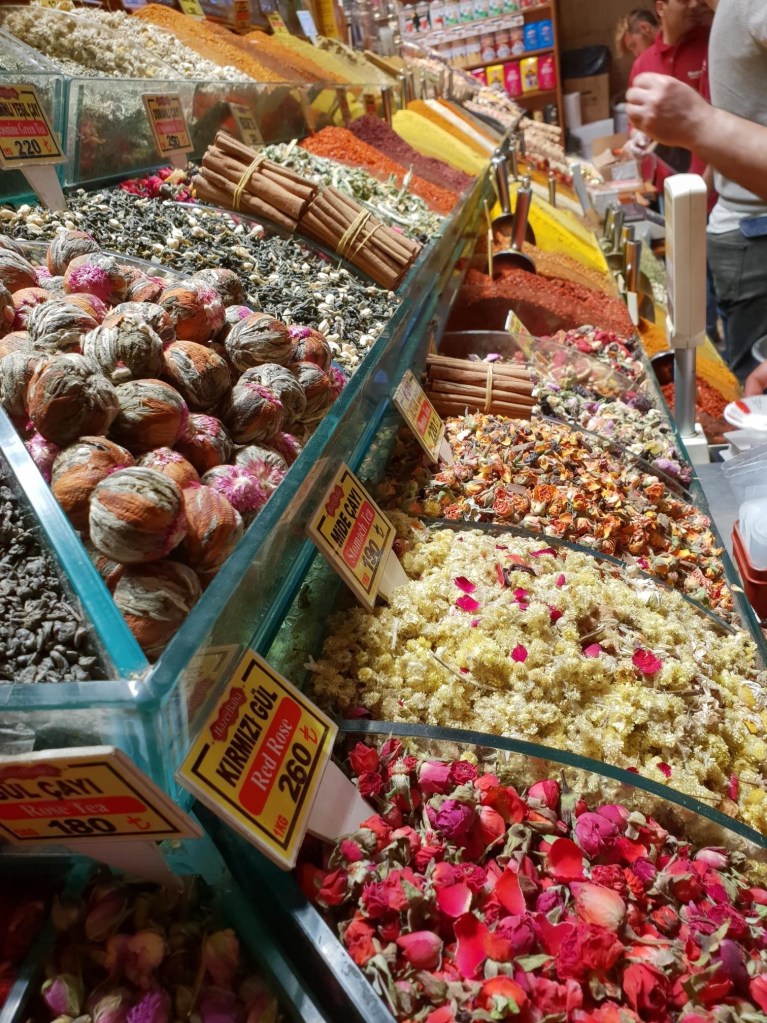
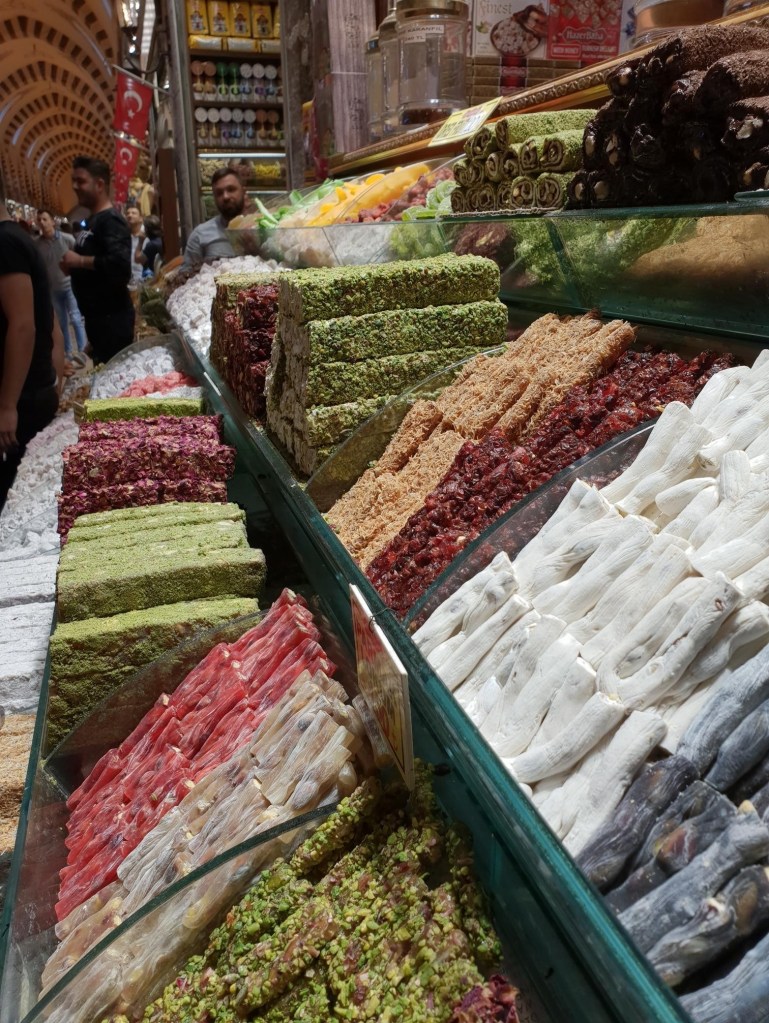
The Spice Bazar AKA the Egyptian market is adjacent to the Grand Bazaar. Not as big as the grand bazaar. However, the columns carefully shaped arches, each symmetrical to the other really spaces out the market. The coloured chandeliers along with the light, really gives the bazar a radiant feel. Each bazaar has its own character even though the same merchandise is being sold across all shops. Turkish Delight displayed across the back walls covering most colours of the colour spectrum. Whilst the front of the stores is covered by spices, pretty balls of Jasmine and dried coloured flowers. The distinct smell of the bazaar can effortlessly make you hallucinate whilst also making your wallet lighter.

The Egyptian Bazaar
Herbs and Spice on offer
The Turkish Delight on display covering all colour spectrums

Golata Towers

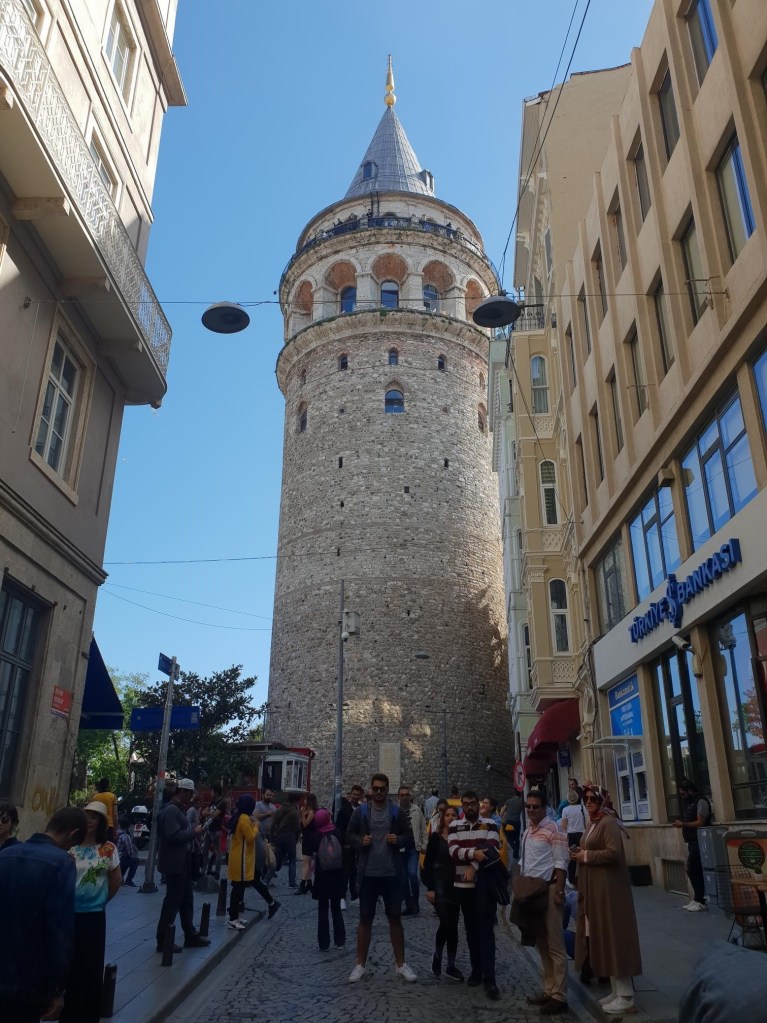
Golata Towers is practically a huge lighthouse currently aged 600-year-old. In all honesty, the brick work and roofing of the tower is spectacular. Sitting at a prominent hill top, Golata Tower imposes itself over the city, at the time it was the tallest structure in Istanbul. The purpose of the towers, was to safeguard the city of incoming threats through land and water. Most definitely worth a visit once you make it to the top. A fantastic panoramic view of the city with a restaurant inside so you can relax whilst taking in the view.

Front on view of the Golata Towers
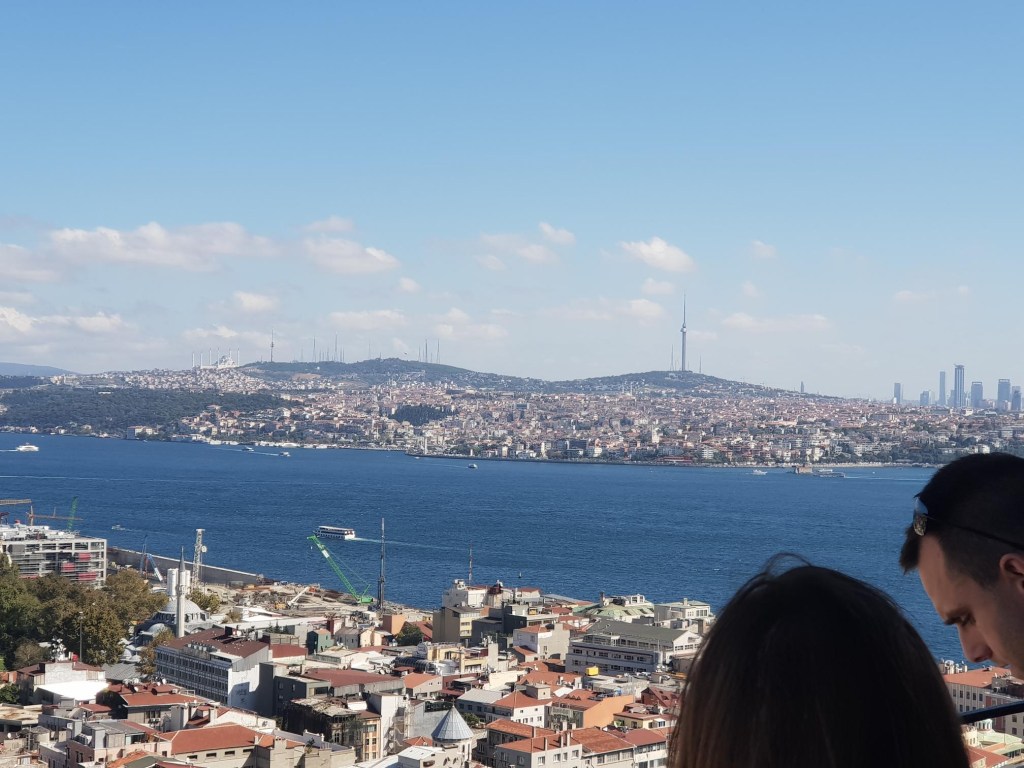
Panoramic View of the city on top of Golata Towers

Taksim Square

Taksim square is the equivalent to Bond Street. If your missing London and are fed up of eating the local food, Taksim Square is the place. A tourist hotspot, all the retail outlets are at your peril and so are all the food chains and fancy hotels. Like most other countries outside of London most recognisable brands are considerably cheaper. I never managed to visit Taksim Square during the night, however, I was told that there are some fantastic roof top restaurants to visit. The Old tram system still runs through the city. Very similar to vintage trams which run through Lisbon. I

Food:

Now there’s a mix response in respect to Turkish food. Some people absolutely love the food and others who did not like it at all. I personally think the food lacked flavour and spices. However, the fresh fish served up well, the prices were extremely fair in accordance to the portion size. I will be sticking to my local Turkish, Istanbul next to Tooting Bec. Fantastic food with great service. Deserves a visit

  1. Meshur Eminonu Balik

Am assuming this must mean open boat fish restaurant. Well in any case, they serve a variety of fresh fish baps, which extremely tasty. I personally requested more onions and doused it with lemons. Worth a visit. Right next to Golata Bridge, not too far from Eminonu Station.

      2.Golata Bridge Restaurants

Golata Bridge has several restaurants all which serve good fish dishes. In all honesty you have to be a terrible cook to mess up a fish dish. Nevertheless, all the restaurant on Golata bridge serve the same food. Different name, same food!!

People:
Like with major cities across the world. The people are hit and miss but it would be unfair to say that the people of Istanbul represent the whole of Turkey. Some people were extremely pleasant and others who were not as pleasant.

Sufism:
Turkey is heavily influenced by Sufism; a lot art and design is Sufi inspired. Quite often tour guides will mention that the architecture of mosques and buildings, were artist and engineers inspired by Sufism. Most of the mosques are full of tombs of ‘saints’, Allah (SWT) knows best, avoid the grave worshipping as this is shirk.

Animal Friendly:

If you are an Ailurophile (cat lovers), then Istanbul is the city crying out for you. It is impossible to not spot cats in Istanbul. There are thousands walking, climbing, running and sleeping everywhere. Allhumdulilah all the cats were well fed and are extremely human friendly. The dogs are also equally treated to the same privilege.

Other recommendations:
Suleymeniye Mosque – Beautiful mosque with beautiful overseeing the Grand Bazaar and the Bosphorus River Boat tour.
Rumeli Hisari Fort – First fort which was erected by the Ottomans.
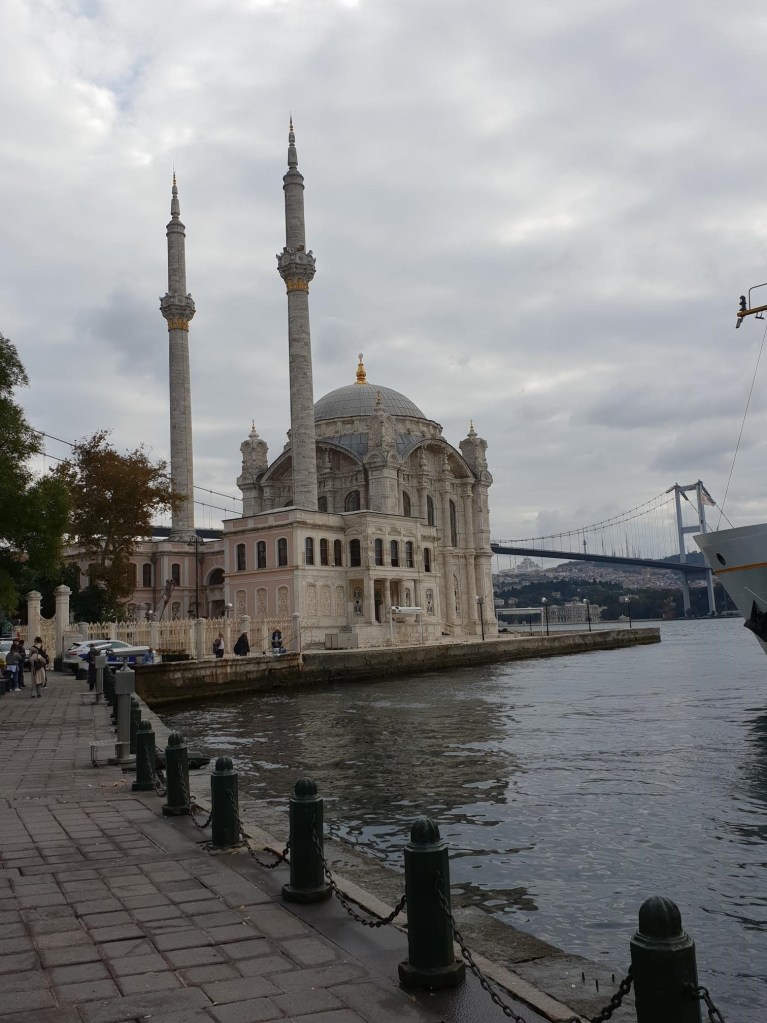
Ortakoy Mosque- A beautiful mosque on the banks of the Bosphurus. A cab journey is required.

Tips:
Keep hold of a wireless mobile charger
Walking Trainers as there is loads of walking involved
Haggle especially with the cabs always bargain 10 liras less. Uber is no longer available