The life and times of Umar (r.a)

This is the second part of a four-part series covering the life of Umar-Ibn-Khattab (r.a) – Umar (r.a) life is one which is relatable for people from different warps of life, be it Muslim or Non-Muslim. This blog will go in to further detail of how influential his life was as a person, believer and a leader. The truth is, the life of Umar (r.a) is so interesting, it can prove a difficult task, in choosing, what should be put in to this blog and what should not. I will try to do justice to Umar (r.a) Inshallah.

Please note- These blogs are bite-size pieces of information regarding the lives of the Sahabas. I strongly recommend reading a Sira (biography) of his life, or maybe listening/attending a lecture to get more information about their lives.

Umar-Ibn-Khattab early life and pre-ignorance-

Umar Ibn Khattab (Umar son of Khattab) born in Mecca to the Banu Hadi Clan. His father’s name was Khattab ibn Nufayl and his mother, Hantama Bint Hashim. Not much is discussed about his childhood, however, it is known that his father was very harsh with him during his early years. A young Umar would tend to his father’s camel and he was often beaten or forced to work long hours which would lead him to exhaustion.

Growing up in Mecca not many people were literate. However, Umar (r.a) was amongst a few that were literate.  He was also an admirer of poetry but there is no mention of whether he was actual a poet himself. Umar (r.a) was also a fond wrestler and was noted to enter many wrestling competitions. Unfortunately, like the others of Quraysh, Umar (r.a) was involved in drinking and other such deviant activities of pre-ignorance.

*Please note that the fitnah which often lingers with Umar (r.a), is that he killed and buried babies alive. This story has not been verified, rather to the contrary, this tradition of killing babies was a frowned practice amongst those of the Banu Hadi clan.

As a young adult he was a merchant. Like many other merchants he applied his trade across different empires. His career as a merchant was not as successful, nevertheless, he was heavily respected amongst his clan and was one of the main leaders of Quraysh.

Umar (r.a) Physical appearance-

Umar (r.a) was very tall, big boned and known for being tall. So much so, he would stand out when he was in populated areas. He was bald, bearded facial hair with an extremely long and thick moustache. 

Umar opposition to Islam

After Muhammad (pbuh) had proclaimed himself as the messenger of Allah (swt) and called for his people to worship Allah (swt) alone. People of Quraysh felt insulted and were in opposition to his calling.  They believed that these pagan gods were responsible for bringing prosperity and wealth; plus, the idea of moving away from their forefather’s traditions was un-thinkable. Initially the call to Islam was met by mockery, however, with the growing number of people answering the prophets call, the Quraysh’s position changed. Initially the Quraysh tried to reason with him; when reasoning failed, they tried to bribe him, when the bribes did not work, they resorted to violence and persecution.

Like many other’s in Quraysh, Umar (r.a) was heavily opposed to the prophet (pbuh) calling. Umar (r.a) who was heavily feared due to his high status amongst the Quraysh, often was the one who initiated many attacks against the prophet (pbuh) and his followers.

Umar (r.a) embraces Islam- The victory for Islam.

After six years of persecution, Muhammad (pbuh) sent his followers to Abyssinia. The growing hatred for Muhammad (pbuh) had spilled-over and only his blood would satisfy the people of Quraysh. Umar (r.a) decided to take it upon himself to settle this matter by taking the prophet’s life. Umar (r.a) was on route to kill the prophet, when he was met by Nuaim bin Abdullah (who was a Muslim in secret), he asked Umar where he was going with such anger, Umar (r.a) disclosed his plan to him. Nuaim (r.a) then advised him that he should fix his own home first before attempting to kill the prophet (pbuh). Umar (r.a) quizzed him on this and Nuaim (r.a) informed him that his sister and brother-in-law accepted Islam. Umar (r.a) was fuelled with rage went marching to his sister’s house.

Umar (r.a) sister (Fatima bint-al Khattab) and brother-in-law (Saeed ibn Zaid) were learning the Quran from Khabbab (r.a) when Umar shouted and demanded that they open the door; Khabbab (r.a) quickly hid knowing what Umar (r.a) was like. He interrogated his sister and it was then disclosed that they both accepted Islam. A fight broke out between Umar (r.a) and his brother-in-law, which lead to Umar (r.a) beating him up, Fatima came to interjection , Umar (r.a) slapped his sister for her interference. Out of guilt he stopped fighting and asked to see what they were vehemently defending. Umar (r.a) was asked to clean himself first before he could read the Quran. After washing himself he read verses of Surah Ta-Ha, at that point he wept and declared himself a Muslim. Khabbab (r.a) came out of hiding and embraced Umar (r.a) acceptance with joy and disclosed the prophecy of Umar (r.a) of accepting Islam.

It was noted that the prophet (pbuh), a week earlier made supplication to Allah, ‘Oh Allah strengthen Islam by the conversion of either Umar (r.a) or Abu Jahal, the prophet (pbuh) du’ah was accepted by Allah (swt).

Knowing of the impending arrival of Umar (r.a), Hamza (r.a) and a couple of Sahabas were waiting with their swords ready to kill Umar (r.a) in the event he attacked the prophet (pbuh). The prophet (pbuh) patiently waited for Umar (r.a) at Arkam ibn Arkam (r.a) house. Umar (r.a) then embraced Islam in front of the prophet (pbuh), this was considered the first victory of Islam.

Umar (r.a) open declared his faith to the chieftains of Quraysh. They were all shocked as learning of Umar (r.a) embracing Islam. Umar (r.a) set a challenge to any member of Quraysh that had an issues with Islam. Muslim’s were now coming out public professing their belief in Islam and they were now openly praying in front of the Kab’ah.

Migration to Medina

After the constant persecution at the hands of Quraysh, the prophet made plans to migrate to Medina with his followers. When the Quraysh had learnt of the prophet (pbuh) plans to migrate they were looking to attack the Muslims. Umar (r.a) had openly challenged members of the Quraysh should they obstruct the Muslim’s from leaving Mecca. None of the Quraysh accepted Umar’s challenge.

Umar (r.a) had migrated to Medina with 20 other sahabas and stayed in Quba until the prophet’s arrival. It was noted that he used his skills as a merchant to deal with the Jewish settlers who lived in in Medina. During his time in Medina, he was popular amongst the Jews and they were always keen to communicate with Umar (r.a) in comparison to the other companions.

Battles that Umar (r.a) was involved in:

Makkah as mentioned in previous blog was a trade haven in the Najd. The Quraysh were one of most powerful tribes and it was not too long before other tribes and cities within the Najd region learned about Muhammad (pbuh) rebellion. Rumour and gossips had made the rounds and the Quraysh were mocked for not being able to control this situation. The Quraysh chieftains were seething in rage and they had to restore their pride as the most powerful tribe within the Najd region. The attack on Islam was a must!!!

The Quraysh had made their intention to attack the Muslims in Medina which led to the battle of Badr. The might of Quraysh brought their chieftains and their most championed soldiers. During the early battle, the Quraysh lost three key men Utbah ibn Rabi’ah, Walid Ibn Utbah and Shaybah ibn Rabi’ah, and the rest of the army were systemically defeated by the prophet (pbuh) and his companions. Umar (r.a) played a crucial role in leading the early Muslims in to victory.

Umar (r.a) was involved in several battles including the battle of Uhud, Battle of the Trenches, Battle of Hunayn, Battle of Khaybar, Battle of Taif and the battle of Tabuk. It would be unnecessary to mention every battle that Umar (r.a) was involved in. For further information regarding these battles, a recommended read would be his Sira (biography) written by Dr Mohammed as-Sallbi.

Death of Muhammed (pbuh)

After the conquest of Mecca and completing the final Hajj with prophet (pbuh), the prophet (pbuh) passed away. Umar (r.a) was overcome with grief and was not in the right state of mind, he began to threaten anyone, who mentioned the prophet’s (pbuh) death. Luckily Abu Bakr (r.a), spoke with a firm voice confirming, that in fact the prophet (pbuh) passed away, and that those who believe in Allah (swt) will know that he is the all-living. Although Umar (r.a) was grief struck, this brought him closure and calmed the fear of Muslims who were in his presence.

Umar (r.a) influence in establish Abu-Bakr as-Siddique (r.a) as the first caliph of Islam:

As mentioned briefly above panic and chaos erupted in Medina after the prophet (pbuh) death. Abu Bakr (r.a) and Umar (r.a) heard that the Ansar were looking to appoint a new caliph amongst them. The Muhaji’roun and the Ansar disputed which group should appoint the new caliph. After hours of dispute Umar (r.a) put forward many strong point’s why Abu Bakr (r.a) should be the Caliph, after delivering his points, Umar (r.a) raised Abu Bakr (r.a) hand and pledged allegiance. The Muhaji’roun and the Ansar quickly rushed to pledge allegiance.

Death of Abu-Bakr (r.a), Umar (r.a) appointed next caliph:

Umar (r.a) was a close advisor to Abu Bakr (r.a) during his two and half years as caliph. He spent most of his time assisting Abu Bakr (r.a). Amongst other things, it was through the assistance of Umar (r.a) that Abu Bakr (r.a) prevented those that memorised the Quran to participate in wars, there were now given the task to assist Zaid Ibn Thabit (r.a) to compile the Quran.

Unfortunately, Abu Bakr (r.a) passed away due to falling ill with fever. On his death bed he appointed Umar (r.a) as the next caliph.

Due to his very strong personality people felt Umar (r.a) would be a harsh ruler. So, Umar (r.a) who was self-conscious about this, did his best to ensure that he reduced his harshness, to make himself approachable to the ummah. As and when required, Umar (r.a) was firm with his followers, but his approach was normally measured by the scale of the issue that he was faced with.

Umar (r.a) as Caliph

Umar (r.a) reign as caliph was to be the longest of the Caliphitul Rashidun. His reign lasted 12 years and those 12 years brought in a great deal of success to Islam. It is narrated that the prophet once had a dream, in which he saw Abu Bakr (r.a) drawing buckets of water out of a well, it was described to have been very laboured; when Umar (r.a) had taken over, he drew water out of the well with great ease and strength, Umar (r.a) continued to do this for a long time. This dream would draw an image of how both Abu Bakr (r.a) and Umar (r.a) leadership would pan out in terms of years spent as caliph.

Expansion:

After Abu-Bakr (r.a) success in unifying the Najd under one religion, the job of expanding the empire became easier. After 12 years of successful military campaigns, Islam had spread from West (Tunisia) to the East (Khorasan aka Afghanistan, covering 25 countries. Islam was now a world power and had finally stamped it’s mark on the world under the leadership of Umar (r.a).

It was reported that an ambassador of the Roman Empire came to Medina bearing gifts. When the emperor had brought gifts for Umar (r.a), a letter was provided with these gifts, referring to him as the King.  Umar (r.a) was very quick to address the matter that he was not a king rather he was a servant of the Muslims, who served as their leader. In any case, the gifts were accepted; however, the gifts which were full of gold and other such treasures, were directed to the Bayt-al-mal, for distribution for the ummah. Our Muslim rulers and ‘Kings’ should look at the leadership of Umar (r.a) to remind them how Muslim rulers would

Umar (r.a) – The Genius

Umar (r.a) without a doubt was a visionary and a pioneer.  During his leadership, Umar (r.a) created many important institutions (Governments, Governors, Police, Courts, Tax Collector, and Administrations) which have been used as a model in all modern governments.  The concept of Common Law in the UK was inspired by the works of Umar (r.a).  A system which embellished justice for all its citizens

Umar (r.a) as leader created courts so that both applicants and defendants had a place to have their matters settled in front of a judge. Anyone that had undertaken a civic role were paid by Umar (r.a). Umar (r.a) would pay high salaries to ensure that people who were in those post would not be corruptible. Whilst he himself had reduced his own wages, even though his wage was chosen amongst the people.

Umar was also responsible for creating major roads leading to cities so that people looking for the city would feel assured that they were heading towards the right direction due to the area being built up. This was masterful and something new in Najd at the time.

The people of Qufa (City in Iraq) once requested that Umar (r.a) consent that he allow the citizens to increase the size of their houses. Upon surveying the situation, Umar (r.a) rejected their request, his reasoning was that, should the people increase the size of their houses, the more worldly they would become and ultimately their deen would be compromised.

Rulers today tend to be worse in character than the people they rule and this can be demonstrated by our present rulers. Umar (r.a) was the epitome of how a ruler should conduct himself. Umar was known for his harshness and would hold himself to the highest standard so that he could be held accountable to his people.

Umar (r.a) would spend the nights patrolling the street, visitor’s coming to Medina would be shocked when they found the ruler patrolling the street.

During the year of famine, Umar (r.a) came across a widow and her children who lived on the outskirt of Medina, she was visibly upset by her condition and even more concerned her children’s hunger, she complained about Umar (r.a) without knowing who Umar (r.a) was. He who was consumed by his guilt and the desire to honour his role as leader, personally walked all the way back to the city and personally carried loads of oat, barley and other provisions to the widow’s house. He personally cooked for the family and fed her children. The women later learned that the man was Umar (r.a)

 Umar (r.a) visit to Jerusalem and improving Judo-Islamic relations!!

After successfully military expansion in to Jerusalem, Umar (r.a) worked on the Judo-Islamic relationship. Umar (r.a) visited the city and ordered the Temple Mount to be cleaned. This was a huge honour for the Jews as their holy-site was going to be renovated after 600 years. The Byzantines had previously left the Temple Mount in rubbish. Umar (r.a) and Umar (r.a) retained their dignity. He also ordered Jew families to move back to Jerusalem to co-habit with their Christian and Muslim brothers.  Umar (r.a) commissioned the building of the mosque in Al-Aqsa and also sanctioned the extension of the prophet’s mosque in Medina and the Haram in Makkah.

Death-

Whilst leading Fajr Salah in Medina, Umar (r.a) was stabbed by his assassin. Umar (r.a) was stabbed several times, the most inflicting wound was to his stomach, Umar (r.a) died from his wounds three days later. Abu Lut-Lut (the assassin) who tried to escape, killed nine others and Injuring three whilst taking his own life. Little is known of his motives due to Lut-Lut taking his life. Uthman Ibn Affan (r.a) was elected the next caliph.

What we learn from Umar (r.a) life.

The life of Umar (r.a) is relatable for any age and generation. Umar (r.a) life teaches us that is never too late to change and it’s never too late to learn and be the best that you can be. From being the biggest enemy of Islam to becoming the immortalised. Umar (r.a) life demonstrates the power of du’ah, how du’ah changed the course of history, Umar (r.a) role in Islam has paved the way for Islam for the last 1400 years and continues to inspire both muslim’s and non-muslins. One last story which ultimately defines Umar (r.a) life is, is his fear of Allah (swt). The prophet (pbuh) once narrated that, one of the sahabas would be destined for hell-fire, the name of the Sahaba was not mentioned; however, the prophet (pbuh) had disclosed the name of the sahaba to Abu Hudaifa (r.a), but he was sworn to secrecy.  Knowing that he (Umar r.a) was one of the promised 10 granted paradise, Umar (r.a) would still pester Abu Hudaifa (r.a), if it was him that was destined for hell fire. This story demonstrates to us that we should always try our best to strive for piety and always seek Allah (swt) pleasure. Never live your life as though you are owed something, surely those who seek Allah (swt) favour always strive humility rather than arrogance.
The Life and Times of Abu Bakr (r.a)

This will be a four-part series covering the lives of the four the most influential Muslim’s after Muhammad (PBUH), these four men were the closest of the Sahaba’s (companion’s) to our beloved prophet. The prophet (pbuh) spoke highly of these great men and went on to confirm that they would be amongst ten to be granted Jannah. Abu Bakr (r.a), Umar ibn Khattab (r.a), Ali Ibn Talib (r.a) and Uthman (r.a) went on to play crucial as Caliph’s after the prophet’s death; the four caliphs are referred to as the four rightly guided Caliphs. I will explore their lives in these blogs Inshallah.

*The blogs are a brief reflection of the sahaba’s life. I do strongly recommend picking up biographies in Islamic shops or attending Sira studies in mosque’s and Islamic colleges.

The early years:

Born in Mecca, Abdulla Ibn Quhafah, better known as Abu-Bakr Siddique, was the son of Uthman Abu Quhafa and Salma Umm Al-Khair. Abu Bakr (r.a) was born into the Banu Taym tribe of Quraish. Due to the harsh conditions in Makkah, the babies of Quraysh were sent to live with Bedouins in the desert, Abu Bakr (r.a) also spent his infancy in the desert. Due to his love for Camel in the desert, he was later given the title the ‘father of camels’ or better known as Abu Bakr. For the benefit of this blog and owing to the popularity of his nickname, we will refer to him as Abu Bakr (r.a).

Unfortunately, not much is not known of his early life. However, like with any of the rich children of Quraysh, he was literate and had a love for poems. At an early age he managed to gain the respect of his tribe due to his impeccable manners. He was very polite and well spoken and this helped him in his later life.

His physical Features

According to all accounts he was tall, thin but with big sized legs; he was also of fair complexion. Due to his thin frame his clothes had to be constantly adjusted as they would not sit on him. His eyes were sunken, and he also had a protruded forehead. In his older years he had white hair and dyed his hair with henna.

His interest and career:                                             

From a young age Abu Bakr (r.a) had an interest in poetry and genealogy of the Quraysh and the politics of all his ancestors. He was also known for his very good memory. Abu Bakr (r.a) at the age of 18 became a cloth merchant which was his family business. A young Abu Bakr (r.a) flourished financially as a cloth merchant. Makkah was an important trading hub of Najd (Present Saudia Arabia) due to it’s caravan route for traders coming from Abyssinia, Yemen, Iraq and Syria. Abu Bakr (r.a) would also venture out to the aforementioned countries to sell his trade. Unlike other merchant’s he did not require to sell dishonestly or slander other merchants; rather his willingness, hard work, hospitality, good manners, well spoken etiquettes attributed to his success.

Through his travels he gained a better perspective of life which made him stand out from the rest of his tribe. His travels brought him more financial success and made him amongst the richest of Quraysh, and his impeccable manners along with strong social networks across Makkah lead to Abu Bak (r.a) being the chief of the Banu Taym tribe.

Abu Bakr (r.a) accepts Islam:

If there was anyone that was going to accept Islam first it would have been Abu Bakr (r.a). He was a well-versed individual who was well balanced in all aspects of his life. A huge sign of his logical reasoning was demonstrated at an early age, a story reminiscent to that of Sayidinna Ibrahim (pbuh). When he was a child, his father instructed him to pray to the idol gods. A young Abu Bakr requested for these idols to provide him with food, clothes and money, each time the idols were despondent. He then threw a stone at the idol gods, to which the gods were unable to protect themselves from. After that incident, Abu Bakr never prayed towards the idols. Also, on his travels to the different part of the Shaam, he would have met with Jews and Christians, and the previous stories and messages would have made sense to him, so it would have been easier for him to accept Muhammad (pbuh) message.

Despite being from a rich family and the cultural norms of the Meccan’s at the time. Abu Bakr never drank wine, committed adultery, gambled, or engaged in any of the immoral activities that many of the Quraysh were involved in. Contrary to the above, when asked about his days of pre-ignorance, he explained that he refused to involve himself in any of the above for the sake of preserving his character.

Upon arriving from a business trip from Yemen, Abu Bakr (r.a) was informed, that Muhammad (pbuh) declared himself a messenger of Allah and he then accepted Islam as his religion. This decision would not have been difficult as Muhammad was loved and respected amongst the Quraysh. Muhammad was known for his honesty and upright character.  Abu Bakr was amongst the first free men to accept Islam.

Abu Bakr (r.a) early struggles and influences

Unfortunately, Muhammad (PBUH) message did not sit well amongst the Quraysh. The Quraysh were in opposition to Muhammad’s (PBUH) call to worshiping only Allah (SWT). Whilst they believed in Allah (SWT), they also believed in other idol gods, like Al-Lat and Al-Uzza, as equal gods to Allah (swt). Muhammad (PBUH) and his early followers were heavily persecuted for their beliefs.

Abu Bakr was once beaten by members of Quraysh, quite brutally in once instance, where he was knocked unconscious; however, this never stopped him from believing in Allah (SWT) and his messenger. Abu Bakr (r.a) played a huge role in bringing Uthman Ibn Affan (r.a), Abdur Rahman Ibn Awf (r.a), Saad Ibn Waqqas (r.a), Al Zubayr (r.a) etc… to the fold of Islam. The named Sahabas as we learn from history all played significant part in Islamic history. Abu Bakr also invested a lot of his own money in emancipating slaves. The most prominent of all the slaves that he freed was Bilal Ibn Rabah (r.a) who was severely tortured by his slave masters for accepting Islam.

Expedition to Medina

After several years of persecution and the added frustration of the growing number of conversions to Islam, the Quraysh had finalized a plan to kill the prophet of Islam. Knowing of their plans through the majesty Allah (swt), Muhammad (pbuh), informed Abu Bakr of their plans and they made plans to migrate to Medina. After successfully orchestrating the safe migration of Muslim’s to Medina, Abu Bakr (r.a) accompanied the prophet to Medina.

That night Muhammad (pbuh) also requested that Ali (r.a) sleep in his bed as the Quraysh were looking to ambush him in his house. The Quraysh were in shock to learn that Ali (r.a) was in his bed which ultimately foiled their plans. This gave Muhammad (pbuh) and Abu Bakr (ra) precious time to venture towards Medina. The Quraysh were livid and were hot on their heels in search og the messenger or Allah and his most trusted companion. At one stage the Quraysh were in touching distance of Muhammad (pbuh) and Abu Bakr (r.a); Abu Bakr was filled with fear for the prophet’s life. The prophet responded Be not sad (or afraid), surely, Allah is with us. Abu Bakr (r.a) and the prophet were protected from the Quraysh. After this incident they both safely made their way to Medina.

Battles that Abu Bakr (r.a) participated in;

Abu Bakr (r.a) participated in several battles alongside the prophet; Battle of Badr, Battle of Uhud, Battle of the Trenches, Battle of Hunnayn and the Battle of Khaybar. In those battle’s, Abu Bakr played a crucial role, never did he waiver in his belief and neither was his bravery compromised. On several occasions he defended the prophet (pbuh) and commandeered different branches of the army in these military campaigns.

To provide an insight of Abu Bakr’s (r.a) bravery and firm conviction in Allah (swt) and his messenger, you would have to examine what limits he would have gone to defend his religion. Abdur Rahman Ibn Abu-Bakr, son of Abu Bakr (r.a), fought against his father during the battle of Badr. Abdur-Raman disclosed to his father that he was in striking distance of his father, but he did not have the heart to kill him. Abu Bakr’s (r.a) responded, that if the opportunity had arisen, he would not have hesitated to kill his son, and that, demonstrates Abu Bakr’s (r.a) conviction in Islam.

The Prophet’s death and being elected the first caliph!!!!

After the successful conquest of Mecca, the prophet (pbuh) completed his farewell pilgrimage and gave his final sermon, for he knew that this would be his final year on this earth. A couple of months later he fell ill and became very weak, so weak that he was unable lead salah in the mosque. On his first day of severe illness, the sahabas waited patiently for the prophet to lead salah, and at the point, the prophet instructed Abu Bakr should lead Salah in his absence, which he did. The Fajr salah before the prophet died, got out of his bed and looked out of the window and greeted his brother with a smile, Abu Bakr decided to move himself from the position of Imam, but the prophet insisted that Abu Bakr maintain his position, he retired back to his bed. Not too long into the day he passed away in Aisha’s house, his wife.

After the prophet’s death, Medina became chaotic and people almost fell into disbelief. People were distraught knowing that the prophet died, so much so, Umar (r.a) threatened to behead any muslim who declared the prophet’s death, at that point Abu Bakr (r.a) addressed the people with a firm voice reminding them that the prophet had indeed died just like other prophet’s,  but indeed he who worship’s Allah knows that he is ever living and never dies. Abu Bakr (r.a) managed to control a situation which could have possibly led to chaos and disbelief.

It is important to note that Abu Bakr (r.a) was known to be an emotional person who often cried. However, during a difficult time, he managed to control his emotions and made critical decision which prevented fitnah. 

News broke out that members of the Ansar were going to appoint a caliph (Islamic leader) amongst themselves and their aim was to exclude the Muhajiroun’s from their appointment.  Umar (r.a) and Abu Bakr (r.a) quickly went to stop the appointment of a caliph. A dispute had broken between the Ansar and the Muhajiroun, the Muhajiroun claimed that the leader would have to be someone from amongst the Quraysh. The Ansar had proposed joint leadership of caliph leadership from both the Ansar and the Quraysh, this proposal was strongly rejected by the Muhajiroun. Umar (r.a) responded that this would cause disunity amongst the muslim’s. At that point Umar (r.a) reminded those in attendance that it was Abu Bakr (r.a) who accompanied the prophet during his escape from Makkah and that it was also Abu Bakr who was appointed to lead the Hajj to Makkah in his absence. Umar (r.a) then pledged allegiance to Abu Bakr (r.a) followed by the Muhajiroun and the Ansar. It is important to note that both Uthman (r.a) and Ali (r.a) also pledged allegiance to Abu Bakr (r.a).

Contrary to distorted views, Ali (r.a) was in support of Abu Bakr’s leadership. The reason for his absence was due to the grieving the prophet’s death. When he heard of the growing tension of this particular meeting he quickly dressed and pledged his allegiance to Abu Bakr (r.a).

It was also reported that the prophet (PBUH) had disclosed that once he was asleep, he was standing over a well with a bucket; he saw Abu Bakr (r.a) drawing water from a well, after two attempts of pulling water out of the well, Umar Ibn Khattab (r.a) had continued drawing water out of the well. This was a strong indication that Abu Bakr (r.a) was strongly positioned to be a caliph first.

Ridah Wars and crucial decisions!!!

Before the prophet (pbuh) passed away, he ordered an army of 3000 men led by a youthful Usama Ibn Zaid to battle the Byzantine’s. However, this campaign was put on halt as the prophet (pbuh) had passed away. With the chaos that ensued after the prophet’s (pbuh) death many people were leaning towards apostacy and there was a need to have a leader appointed to steer the Muslims.

After learning of the apostacy across the Najd (arab peninsula), many sahabas believed that Abu Bakr (r.a) should focus on dealing with the apostacy rather than continuing with the Byzantine campaign. Under a lot of pressure, Abu Bakr (r.a) stood firm with his decision that the battle of Mutah should be fought as per the prophet’s wish.

After the successful campaign of Mutah. Abu Bakr (r.a) spent the remainder of his leadership battling apostates and other Arab tribes that posed a threat in the Najd. After successfully defeating the Byzantine’s at the battle of Mutah, some sahabas were keen to engage with other empires to spread Islam; however, Abu Bakr (r.a) did not become overzealous with the idea of engaging with other empires, rather he wanted to unite the arab’s under one faith.

Abu Bakr (r.a) successfully completed many campaigns across the Najd, the most notable campaigns were against Musailamah Al-Khazab (Musailamah the Liar), Tulayha and Al-aswad Al-Ans from Yemen, all false prophets.

The battle of Yamamah (battle against Musailamah) provided valuable lessons to Abu Bakr (r.a), unfortunately many of the sahabas that memorized the Quran were martyred in this campaign. At that particular time the Quran was yet to be completed. Umar (r.a) recommended that in order to compile the Quran, those who had memorized the Quran were not required to attend battles, as they would be required to support Zaid Ibn Thabit (r.a) in compiling the Quran.   

Both examples of the above demonstrate the excellent military tactics deployed by Abu Bakr (r.a) during a difficult time in Islamic history.  In a time of anarchy, disruption and chaos; Abu Bakr (r.a) was able to use sound mind to make tough decisions which were not always considered popular. By making these tough decisions, Abu Bakr (r.a) united the Arab peninsula under the banner of Islam, which then led to further successes across Persia and Syria.

Death

Abu Bakr’s (r.a) leadership lasted two years until his death. He was plagued a fever which he never recovered from that ultimately led to his death. He passed away in Aisha (r.a) house and was buried next to the prophet (pbuh). Umar-Ibn-Khattab (r.a) was chosen as his successor.

Jedi -When Chickens come home to Roost

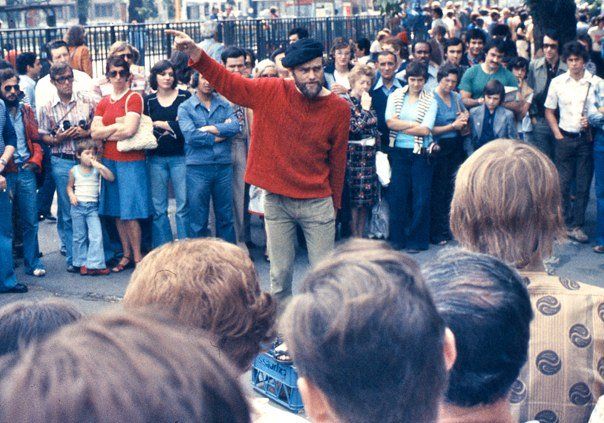
Speakers Corners the epitome of what democracy stands for. The right to voice your opinion about any such matters that you wish without being persecuted by any member of the public or prosecuted by the police/government.

Speakers Corner once was a place where budding personalities honed their abilities to put their views across whilst also being challenged by other academics or the wider public. The park has been graced by esteemed individuals like George Orwell. Lenin, Marcus Garvey, William Morris etc…all going to etch their names in history. However, the park is now synonymous to racist, extremist, thugs and bigots. When mixed together leads to a cacophony of intolerable noise, foul language, insults, threats and then violence. Notwithstanding the above, there are some great speakers like Mansur, Hashim, Adnan Rasheed, Mohammed Hijab, Ali Dawah and Bro Hajji who are well versed daee’s who are well worth listening to.

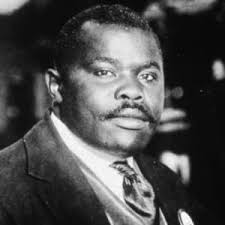
Marcus Garvey

Why the rise of hostility in Speakers Corner?

There are a couple of variables which contribute to growing hostilities which I will touch upon below.

With the rise of the Right-Wing and the ever-growing concern of Islamophobia, the park has been rightfully used by the public to voice their concerns which is fantastic; however, there are pockets of people from different religions and beliefs that use the park to destroy the fabric of what Speaker Corner stands for. Whilst you have the right to challenge people’s views, I do believe that there are ways in which you can do this without having to raise your voice, throwing insults and exchanging blows.

YouTube:

Like with anything in life the interaction of social media is a must. Speaker’s corner does not fall foul of this exception. A lot of the going on’s of the park are now recorded on a weekly basis. Whilst some may argue that it maybe for the great good or bad of the park, YouTube has exposed the park and as a result, viewers will liken the park to a weekly soap drama.

YouTube Live:

As tradition holds Speakers Corner is observed every Sunday’s from 12am to 11:59pm, Sunday evening. However, with the rise of technology, the ‘Regular’ Speaks Corner residents are now taking their conversations and political agendas online through ‘live streams’ which then spills over to the park. These live streams can often last between 8 to 12 hours which then begs the question what do these people do with their lives.  Nevertheless, this ‘he’ said ‘she’ said adds to the extra tension in the park.

Jedi -Guiding A New Generation or Destroying A New Generation?

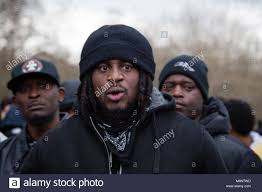
 Jedi Ali better known as Jedi has been a regular at the park for the past three to four years. Jedi (to the best of my knowledge) is a black separatist that advocates for black betterment by black people, which in itself is a noble cause. Jedi is part of an organization called GANG (Guiding a New Generation) mirrors that which has been mentioned above.

Since I remember being at the park or watching speakers’ corner on YouTube, Jedi is constantly surrounded by some form of controversy. Jedi is involved in heckling, shouting, using abusive language, intimidation or physically assaulting Muslim’s. So, the question remains, how can GANG achieve its goal when you have a 45-year-old man and his other group of associates behaving like a bunch of school kids in a playground?

Jedi attacking Muslims!!!

A couple of years ago Jedi was considered a friend of the Muslim community in the park. When there was hostility in the park, Jedi was amongst those non-Muslim’s who defended the Muslims. However, as the years have passed, Jedi has built himself a reputation of being verbally and physically abusive towards Muslim’s. Zakariya, Abu Talha, Oz and now Ahmed Ali have been subject of his abuse. Jedi’s attacks have become more frequent and vicious. Jedi may argue that the attacks were not against Islam but more against the individual, but that in itself begs the question, why are all his victims Muslims? Is there a Muslim agenda to attack Jedi? Stop Jedi from manifesting his free Speech? Do they intimidate, bully or heckle him? Not from what I have seen but maybe Jedi knows something we don’t know

The Ahmed Ali incident

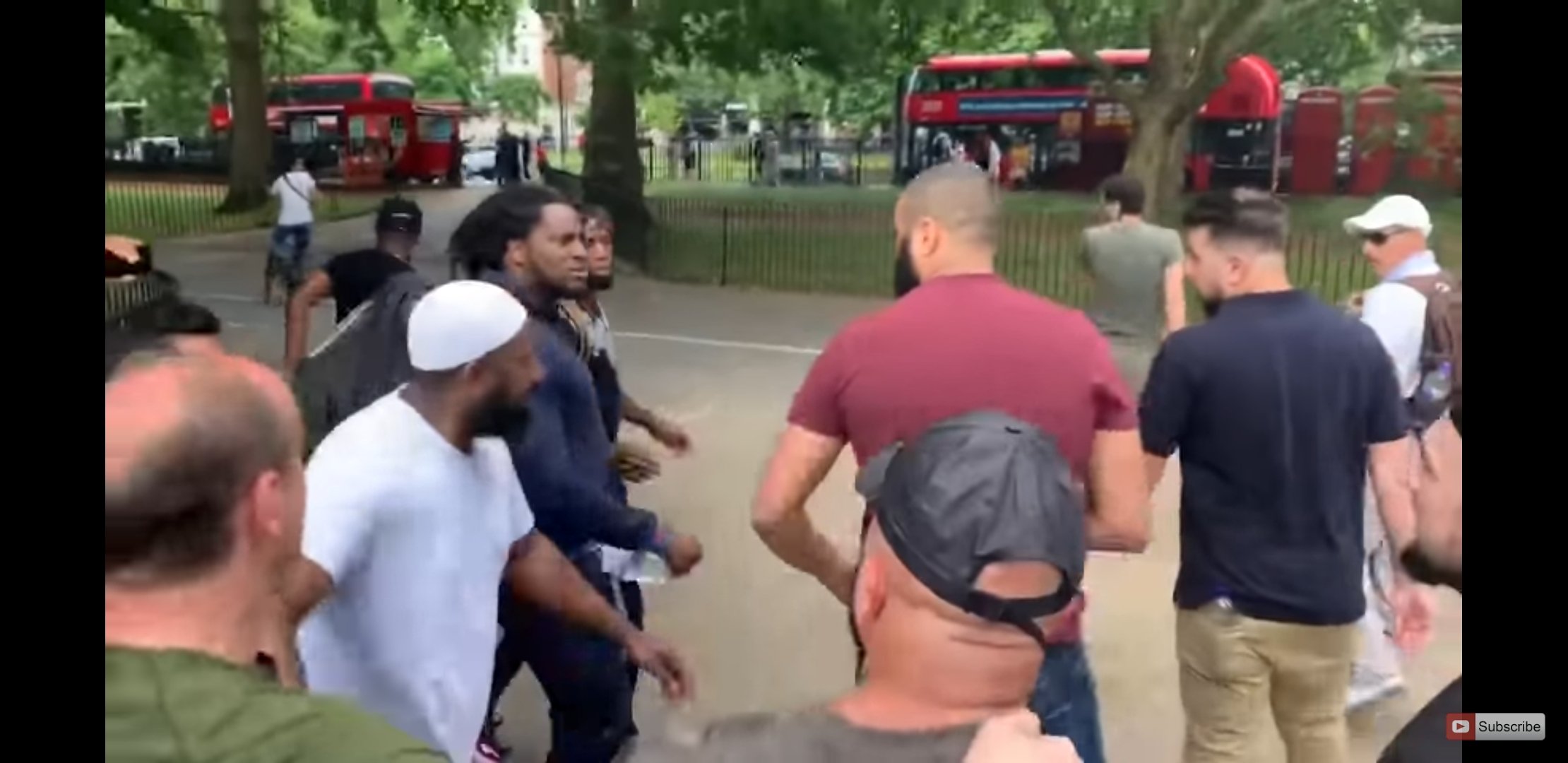
A month ago, Jedi and his mob (Maku and Beefy) had viciously attacked Ahmed Ali in the park after Ahmed Ali was provoked in to throwing a punch towards Jedi and his gang. Ahmed Ali was viciously attacked thereafter buy three men twice his size. Prior to the altercation, Ahmed Ali was having a conversation with Steve about an incident involving Ahmed Ali earlier, Jedi and his GANG member had hijacked their conversation with constant heckling, Jedi’s agenda before punches were thrown was to provoke Ahmed Ali by insulting his mother, which ultimately lead to the ensuing incident. Ahmed Ali was banned for one year from the park and no further action was taken upon Jedi and his gang. The punishment could be considered as inconsistent as Jedi and GANG were responsible for provoking Ahmed Ali and their actions thereafter were far more dangerous.  

What people may not be aware of, an incident had occurred between Ahmed Ali and Jedi six or seven months ago.  Ahmed Ali was having a discussion about black betterment with Raven (leader of gang). Amongst many other topics covered, Ahmed Ali had questioned the violent and inappropriate behavior of certain GANG members; his position was that GANG’s main objectives of black betterment could not be achieved so long as these particular individuals are still associated with GANG. Jedi who was present at this discussion was clearly rattled by Ahmed Ali’s comment, he then heckled and verbally abused Ahmed Ali. Ahmed Ali who was aware that Jedi attacked Oz last week, reminded Jedi that he was not scared of Jedi. Since that day Jedi has been looking for a reason to antagonize him until he successfully managed to get the better of him.

Post Ahmed Ali- Mohammed Hijab challenges Jedi, Jedi runs and then escorted out by police!!!

Jedi’s aura of invincibility had risen to an all-time high. After attacking aesthetically smaller men with very little repercussion, Jedi came to the park resuming business as usual. However, the muslim community were enraged by his action and demanded him to address the incident. Naturally Jedi’s dismissive behaviour would not enable him to do so and he offered Mohammed Hijab a fight, to which Mohammed Hijab accepted.

 As is the case with most bullies, when confronted with someone who is of equal stature and not willing to back down, Jedi chickened away from the confrontation (the videos on TNT’s Greek, COE and Mohammed Hijab’s channels), all show his initial reaction when Hijab was going to fight him. Jedi spent a huge part of his time playing the victim card claiming that he was going to get stabbed and he continued pacing up and down the park anxiously. Reality hit home that he didn’t want to fight Mohammed Hijab and he did his best to leave the park was eventually escorted out by police.

The confusion and the body language says it all!!

‘You never did this to Raj or Tan’ but why Jedi?

Jedi in his anxious state appealed to reasoning by mentioning that the muslims never attacked Raj or Tan (both who vehemently are opposed to Islam). Well the answer is quite academic. Both Tan and Raj have never physically harmed a muslim.  Had Jedi not attacked muslim’s previously and handled the issue with respect, this situation would have never arisen.  

Quite often you hear that the muslims are always physically aggressive in the park. Well if that was the case; how is that Tan, Raj and members of DCCI ministry have not been physically attacked? DCCI are an extremist conservative Christian group that look to antogonise Muslim’s with cherry-picked and misquoted verses of Islamic literature.  Their leader, Jay Smith a self-confessed Islamaphobe, is a personal friend of Tommy Robinson.  

Stripper turned gangster? Examining Jedi.

Like with most bullies there is always some a sub-text as to why they behave the way they do. In Jedi’s case it’s quite simple. Allegedly, Jedi was bullied whilst growing up in his estate in Peckham. He went on to pursuit various careers, amongst others, as a stripper and pole dancer. What it appears, like in many cases, Jed has internalized a lot of his anger from his past coupled with his chosen career as a stripper and plastered this new persona as road-man gangster which is a far cry from ‘reality’.

Attack one, attack us all!!!

Members of GANG have often brandished their motto of ‘attack one attack us all’. The acronym of GANG has formed in to a literal gang. Allegedly Raspect who was present at the time of the Ahmed Ali incident, reverted from his original position that Ahmed Ali was wrongfully attacked by later boasting GANG’s mottot. But yet when the same principle was applied by the muslims, the race card came was used by GANG members. Hypocrisy and double standard at the highest order. For the record 50 percent of the African continent is muslim just to end that conversation.  

In Summary

What had happened in the park was a sorry state of affairs for Speakers Corner. The park should not have come to the point where people have to resort to violence. The park should be preserved as a place where people have the right to be cordial in discussion without the fear of being attacked. Nevertheless, violence begets violence. Jedi had this coming for along time and this was clearly a matter in which chickens coming home to roost.

Brother Mansur, Hahim and Mohammed Hijab

Unfortunately, a lot of people have used the park to massage their own ego to canvass a life that they may have never have lived. Speakers Corner is not the place you look for a fight. The park is not a playground for gangsters or for those who want to have a dust up rather it is a place for people to share their views without being persecuted. Should you wish to pursuit this life, there are many other places in London which welcome this behavior, or alternatively there are MMA gyms all across London.

If GANG is to be successful in it’s objective, just to echo the words of Ahmed Ali, GANG members have to behave in a way in which the younger generation of black youth can aspire towards being. This can only be achieved by members of GANG having sound intellect conversation, behaving respectful to those in the park without resorting to foul language and violence. All of the above characteristics can be found in members like Raven.

*For the record. Am not against GANG or it’s aim’s and objectives. If anything, I think it is a noble cause and I wish that they succeed in their endeavor’s.    

A bit of advice:

Speakers Corner is an extremely toxic place where all sorts of insults will be thrown towards yourself and your religion. If you are not thick skinned and are not apt in defending Islam than do your best to avoid the park. Should you be sincere in seeking knowledge, listen to those speakers who have knowledge. Like Hashim, Mansur, Adnan Rashid, Mohammed Hijab both Hamza (Bengali and English), Abbas, Bro Hajji and Ali Dawah. Imam Malik once stated that the best form of knowledge is listening.  Also avoid the fitna of certain regulars in the park especially those without knowledge. If you are argue with a fool, bystanders will see two fools.

Also, I understand it can be tempting listening to someone like Mohammed Hijab. As relatable as he can be; in that he is young man, probably from the same streets as many of us and facing the same challenge of a working-class Londoner. However, it is important to remember that he obtained degrees and masters whilst also studying Islam. He never gained this knowledge over night and it will be naïve for us to replicate the same . This requires knowledge!!!

May Allah (swt) reward all our brothers and sisters that are involved in the dawah scene!!!

Islamophobia: The right to offend, the right to be offended? After the tragic events of Christchurch where do we draw the line!!!

I want to start this blog off by remembering our children, brother and sisters who were martyred in Christchurch mosque before Jummah Salah (Friday Prayers).  Those who have died in Wudhu (state of ablution) will benefit greatly in the hereafter.

The rise of Islamophobia and racial intolerance have spiked across the globe since 9/11. I don’t think it’s necessary to go in to the nuances of every incident that have occurred post 9/11. A number of issues can be identified for the rise of hate crime. Firstly, western invasion in Arab lands to tackle the war on terror and the other agenda is to disable ‘autocratic’ governments which are not compatible with Western geo-politics. A direct result of war-torn countries leads to fear of life, and a fear losing your life, results in mass migration to safer countries. The third and most important rise of hate crime has been heavily supported by the work of media propaganda and social media demagogues. The media has worked tirelessly in demonizing ethnic groups and Islam in the west which has lead to where we are today.

The endemic rise of right-wing fanaticism has spread across the globe. The support of the media and successive governments have stoked the flames of a growing fire which has spread rapidly. Right- wing political groups has gained huge popularity across Europe in recent times, the UK itself is heading towards Brexit where people have cited immigration as a common reason to leave the EU, and the successful election of Trump was the proverbial cherry on top.

A spate of attacks across Europe and America are growing concerns for the Muslim communities. It was only two years ago that a mass shooting incident occurred in a mosque in Quebec where 6 muslims were shot at by a white supremacist. In Norway, Anders Breivik (Neo-Nazi) killed 8 in an Arson attack and then went on a shooting spree killing close to 80 people in defiance of multi-culturalism and Islamification of Europe.

In the UK, we have seen several incidents of violence towards the muslim community, most notable,  Darren Osborne driving his van in to a bunch of worshipers outside a mosque in Finsbury Mosque. There are many other attacks we can mention but this would require further scrutiny. Nevertheless, the Home Office latest reports on Hate Crime highlighted a 40 percent rise in religious hate-crime from 2016/2017 to 2017/2018.

This recent Christchurch massacre is the epitome of prevalent right-wing terrorism. Prevent an initiative created by the UK Government reported a 36 percent rise in right-wing fanaticism in 2017/18. So, this attack was of no surprise.

The right to Offend?

Freedom of speech is the by-product of democracy. Each and everyone of us has the right to have their freedom of speech protected. However, the question that should be asked, how far do we go before we have the right to offend?  If, you are advocating the right to offend? How far does offence go when your words become a risk to the public?

Why Tommy Robinson?

After the recent events in Christchurch, it is evident that the right to offend, when it ends up in the the wrong hands, can have disastrous effects. Tommy Robinson shot to fame in 2008 after a group of Anjem Chaudary supporters (A fringe minority) started burning poppies at a returning home parade for soldiers of Luton. The likes of Tommy Robinson have used his platform to aggressively attack muslims and Islam. Tommy set up the English Defence League (EDL) in 2008, and has gained popularity amongst deprived working-class communities. Tommy in his own admission has profited heavily from Islamophobia and continues to gain popularity with his anti-islam rhetoric. Tommy understands people who have genuine concerns and directs these concerns in to hate rather than dealing with solutions.

*On the topic of the Islamophobia industry. University of Berkeley found that 208 million dollars was invested between 2008-2013 in to Islamophobia. Am sure that number has probably doubled since 2013.

Going back to Anders Breivik. Prior to his infamous terrorist attack in 2011, Anders Breivik had strong links to the EDL. He also admitted to being inspired by the EDL and also wanted to join an EDL march in Bradford prior to his own demolition job. There were also EDL Facebook forums that he actively participated in. Yet Breivik is yet to show any remorse for his actions and was evidently happy in court when he met the victims families in court.

Brenton Tharrant, the Christchurch terrorist himself was inspired by Ander’s Breivik. Brenton met with his Idol Breivik as cited in his 74-page manifesto, prior to carrying out his horrific act. All roads in this case lead to Tommy Robinson. Tommy Robinson’s words have had an impact, granted he has not acted out his word, but his words alone have had domino effect, looking at the the Norway and Christchurch attacks. So, should Tommy be held responsible?

The same can be said regarding Anjem Choudhary. Both Anjem and Tommy are two cheeks of the same ass.

The Media

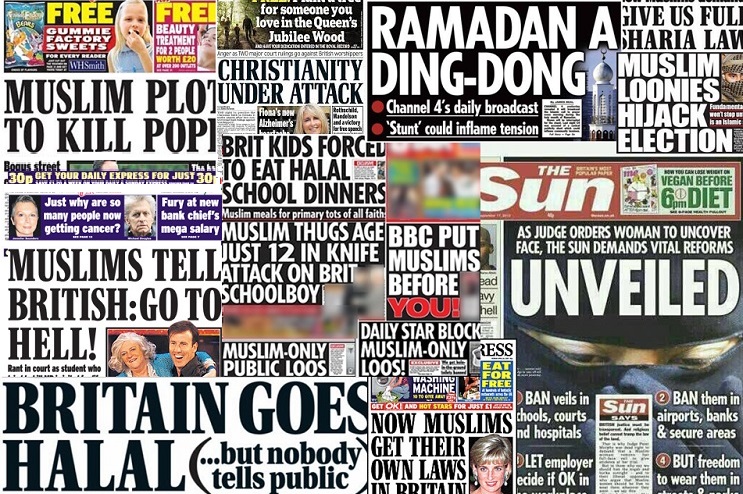
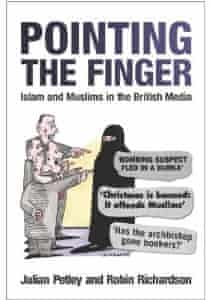
The mainstream media is as responsible as the extremist. In a democracy, the freedom to press is an absolute right to any democracy, however, the media has lost its way in the framework they operate within. The concept of freedom to press was to ensure that true stories are told and the public are kept informed freely from parliamentary and government bias. Third world countries are dictated by  autocratic governments, however, in this country, the mainstream media dictates are political views.

How much influence does the media have? Well in 1994, the Sun Newspaper (the most popular paper in the UK) had sensationalized that they had won the general election. Going as far as the 1970’s, any political party which has been supported by the Sun has gone on to win the general election. How easy would it be for the Sun Newspaper to push forward a negative agenda? The answer is quite simple…

Have the media flirted with the right-wing nationalism in their attack against semetic religions? Well the answer is yes. During the early 30’s, Lord Rothermere the owner of the immigrant and race bashing newspaper was an advocate of Hitler and openly supported the attacks of Jews that lived in Germany. So, it should be of little surprise when we see these papers demonising muslims or Islam.

Neil Basu, chief of counter-terrorism in the United Kingdom has openly criticized the main-stream media for its role in radicalizing right-wing terrorism. Basu was particularly critical of the Daily Mail and the Sun coverage of the Christchurch video shooting, but yet the same mainstream-media had been critical of social media sites, for their failure to monitor the uploading of Islamic terrorism videos.

Quite often, you read sound bites of right-wing fanatics being labelled ‘lonely wolf, victims of some sorts, innocent angelic kid that lead them to doing x,y and z etc.…. The mainstream media have tried to legitamise reasoning for right-wing fanaticism. However, the same reasoning is not provided to fanatics who propagate attacks in the name of ‘Islam’. Not for one minute would I expect the media to defend these terrorists. However, the hypocrisy and double standards of the mainstream media operates within its framework.

The right to be offended?

When the right to offend is so easily appropriated the right to be offended can be easily crossed. When you incite hatred and demonize communities it doesn’t take too long for people to rely on journalistic writings, to act upon bigotry and hatred.

However, how far does the right to be offended go before its actions have a tragic consequence. Does is start with conversations, the right to insult, the rick to mock, the right to protest, the right to blog, the right to incite hatred? Or the right to act like we all saw in Christchurch?

The Solution:

The premiere of New Zealand in unity with the Muslim com
munity in mourning

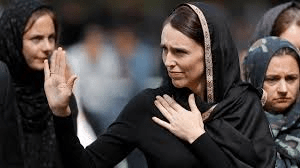
Well astonishingly for the first time we have seen the word ‘terrorist’ being used inclusively for the first time. For the first time, as far as I can remember, the word terrorist has been labelled to a non-muslim. The premiere of New Zealand, Jacinda Adern, a beacon of light for the global unity, stood with the muslim community and mourned with us. Not only did she mourn, she condemned the vile actions of Brendon Tarrant, and labelled him a terrorist.

Considering the huge steps taken by Jacinda, I think the media should also take a stronger position in condemning all forms of terrorism. However, if they fail to do so, a stronger position should be taken hold the media accountable.  A regulatory body with the power to enforce huge fines and potential criminal prosecutions would be the most beneficial way in dealing with the media should they continue to stoke the flames of Islamophobia.

Hate preachers like Tommy Robinson and Anjem Chaudary who are guilty of radicalizing others, stricter guidelines should be put in place to monitor their social media platforms, disable their social media in the event they are pushing the boundaries, or impose prosecutions to those who choose to purposely incite bigotry, racism and islamophobia through violence.

Hopefully we can use the events of Christchurch to unite communities…