
This will be a four-part series covering the lives of the four the most influential Muslim’s after Muhammad (PBUH), these four men were the closest of the Sahaba’s (companion’s) to our beloved prophet. The prophet (pbuh) spoke highly of these great men and went on to confirm that they would be amongst ten to be granted Jannah. Abu Bakr (r.a), Umar ibn Khattab (r.a), Ali Ibn Talib (r.a) and Uthman (r.a) went on to play crucial as Caliph’s after the prophet’s death; the four caliphs are referred to as the four rightly guided Caliphs. I will explore their lives in these blogs Inshallah.
*The blogs are a brief reflection of the sahaba’s life. I do strongly recommend picking up biographies in Islamic shops or attending Sira studies in mosque’s and Islamic colleges.
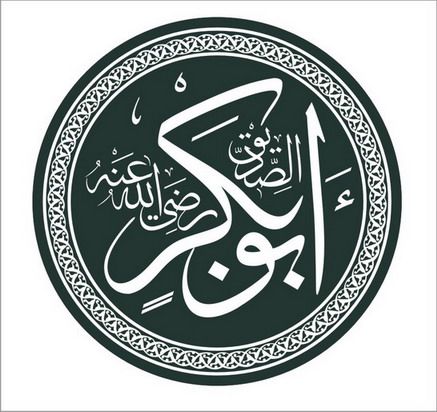
The early years:
Born in Mecca, Abdulla Ibn Quhafah, better known as Abu-Bakr Siddique, was the son of Uthman Abu Quhafa and Salma Umm Al-Khair. Abu Bakr (r.a) was born into the Banu Taym tribe of Quraish. Due to the harsh conditions in Makkah, the babies of Quraysh were sent to live with Bedouins in the desert, Abu Bakr (r.a) also spent his infancy in the desert. Due to his love for Camel in the desert, he was later given the title the ‘father of camels’ or better known as Abu Bakr. For the benefit of this blog and owing to the popularity of his nickname, we will refer to him as Abu Bakr (r.a).
Unfortunately, not much is not known of his early life. However, like with any of the rich children of Quraysh, he was literate and had a love for poems. At an early age he managed to gain the respect of his tribe due to his impeccable manners. He was very polite and well spoken and this helped him in his later life.
His physical Features
According to all accounts he was tall, thin but with big sized legs; he was also of fair complexion. Due to his thin frame his clothes had to be constantly adjusted as they would not sit on him. His eyes were sunken, and he also had a protruded forehead. In his older years he had white hair and dyed his hair with henna.
His interest and career:
From a young age Abu Bakr (r.a) had an interest in poetry and genealogy of the Quraysh and the politics of all his ancestors. He was also known for his very good memory. Abu Bakr (r.a) at the age of 18 became a cloth merchant which was his family business. A young Abu Bakr (r.a) flourished financially as a cloth merchant. Makkah was an important trading hub of Najd (Present Saudia Arabia) due to it’s caravan route for traders coming from Abyssinia, Yemen, Iraq and Syria. Abu Bakr (r.a) would also venture out to the aforementioned countries to sell his trade. Unlike other merchant’s he did not require to sell dishonestly or slander other merchants; rather his willingness, hard work, hospitality, good manners, well spoken etiquettes attributed to his success.
Through his travels he gained a better perspective of life which made him stand out from the rest of his tribe. His travels brought him more financial success and made him amongst the richest of Quraysh, and his impeccable manners along with strong social networks across Makkah lead to Abu Bak (r.a) being the chief of the Banu Taym tribe.
Abu Bakr (r.a) accepts Islam:
If there was anyone that was going to accept Islam first it would have been Abu Bakr (r.a). He was a well-versed individual who was well balanced in all aspects of his life. A huge sign of his logical reasoning was demonstrated at an early age, a story reminiscent to that of Sayidinna Ibrahim (pbuh). When he was a child, his father instructed him to pray to the idol gods. A young Abu Bakr requested for these idols to provide him with food, clothes and money, each time the idols were despondent. He then threw a stone at the idol gods, to which the gods were unable to protect themselves from. After that incident, Abu Bakr never prayed towards the idols. Also, on his travels to the different part of the Shaam, he would have met with Jews and Christians, and the previous stories and messages would have made sense to him, so it would have been easier for him to accept Muhammad (pbuh) message.
Despite being from a rich family and the cultural norms of the Meccan’s at the time. Abu Bakr never drank wine, committed adultery, gambled, or engaged in any of the immoral activities that many of the Quraysh were involved in. Contrary to the above, when asked about his days of pre-ignorance, he explained that he refused to involve himself in any of the above for the sake of preserving his character.
Upon arriving from a business trip from Yemen, Abu Bakr (r.a) was informed, that Muhammad (pbuh) declared himself a messenger of Allah and he then accepted Islam as his religion. This decision would not have been difficult as Muhammad was loved and respected amongst the Quraysh. Muhammad was known for his honesty and upright character. Abu Bakr was amongst the first free men to accept Islam.
Abu Bakr (r.a) early struggles and influences
Unfortunately, Muhammad (PBUH) message did not sit well amongst the Quraysh. The Quraysh were in opposition to Muhammad’s (PBUH) call to worshiping only Allah (SWT). Whilst they believed in Allah (SWT), they also believed in other idol gods, like Al-Lat and Al-Uzza, as equal gods to Allah (swt). Muhammad (PBUH) and his early followers were heavily persecuted for their beliefs.
Abu Bakr was once beaten by members of Quraysh, quite brutally in once instance, where he was knocked unconscious; however, this never stopped him from believing in Allah (SWT) and his messenger. Abu Bakr (r.a) played a huge role in bringing Uthman Ibn Affan (r.a), Abdur Rahman Ibn Awf (r.a), Saad Ibn Waqqas (r.a), Al Zubayr (r.a) etc… to the fold of Islam. The named Sahabas as we learn from history all played significant part in Islamic history. Abu Bakr also invested a lot of his own money in emancipating slaves. The most prominent of all the slaves that he freed was Bilal Ibn Rabah (r.a) who was severely tortured by his slave masters for accepting Islam.
Expedition to Medina
After several years of persecution and the added frustration of the growing number of conversions to Islam, the Quraysh had finalized a plan to kill the prophet of Islam. Knowing of their plans through the majesty Allah (swt), Muhammad (pbuh), informed Abu Bakr of their plans and they made plans to migrate to Medina. After successfully orchestrating the safe migration of Muslim’s to Medina, Abu Bakr (r.a) accompanied the prophet to Medina.
That night Muhammad (pbuh) also requested that Ali (r.a) sleep in his bed as the Quraysh were looking to ambush him in his house. The Quraysh were in shock to learn that Ali (r.a) was in his bed which ultimately foiled their plans. This gave Muhammad (pbuh) and Abu Bakr (ra) precious time to venture towards Medina. The Quraysh were livid and were hot on their heels in search og the messenger or Allah and his most trusted companion. At one stage the Quraysh were in touching distance of Muhammad (pbuh) and Abu Bakr (r.a); Abu Bakr was filled with fear for the prophet’s life. The prophet responded “Be not sad (or afraid), surely, Allah is with us. Abu Bakr (r.a) and the prophet were protected from the Quraysh. After this incident they both safely made their way to Medina.
Battles that Abu Bakr (r.a) participated in;
Abu Bakr (r.a) participated in several battles alongside the prophet; Battle of Badr, Battle of Uhud, Battle of the Trenches, Battle of Hunnayn and the Battle of Khaybar. In those battle’s, Abu Bakr played a crucial role, never did he waiver in his belief and neither was his bravery compromised. On several occasions he defended the prophet (pbuh) and commandeered different branches of the army in these military campaigns.
To provide an insight of Abu Bakr’s (r.a) bravery and firm conviction in Allah (swt) and his messenger, you would have to examine what limits he would have gone to defend his religion. Abdur Rahman Ibn Abu-Bakr, son of Abu Bakr (r.a), fought against his father during the battle of Badr. Abdur-Raman disclosed to his father that he was in striking distance of his father, but he did not have the heart to kill him. Abu Bakr’s (r.a) responded, that if the opportunity had arisen, he would not have hesitated to kill his son, and that, demonstrates Abu Bakr’s (r.a) conviction in Islam.
The Prophet’s death and being elected the first caliph!!!!
After the successful conquest of Mecca, the prophet (pbuh) completed his farewell pilgrimage and gave his final sermon, for he knew that this would be his final year on this earth. A couple of months later he fell ill and became very weak, so weak that he was unable lead salah in the mosque. On his first day of severe illness, the sahabas waited patiently for the prophet to lead salah, and at the point, the prophet instructed Abu Bakr should lead Salah in his absence, which he did. The Fajr salah before the prophet died, got out of his bed and looked out of the window and greeted his brother with a smile, Abu Bakr decided to move himself from the position of Imam, but the prophet insisted that Abu Bakr maintain his position, he retired back to his bed. Not too long into the day he passed away in Aisha’s house, his wife.
After the prophet’s death, Medina became chaotic and people almost fell into disbelief. People were distraught knowing that the prophet died, so much so, Umar (r.a) threatened to behead any muslim who declared the prophet’s death, at that point Abu Bakr (r.a) addressed the people with a firm voice reminding them that the prophet had indeed died just like other prophet’s, but indeed he who worship’s Allah knows that he is ever living and never dies. Abu Bakr (r.a) managed to control a situation which could have possibly led to chaos and disbelief.
It is important to note that Abu Bakr (r.a) was known to be an emotional person who often cried. However, during a difficult time, he managed to control his emotions and made critical decision which prevented fitnah.
News broke out that members of the Ansar were going to appoint a caliph (Islamic leader) amongst themselves and their aim was to exclude the Muhajiroun’s from their appointment. Umar (r.a) and Abu Bakr (r.a) quickly went to stop the appointment of a caliph. A dispute had broken between the Ansar and the Muhajiroun, the Muhajiroun claimed that the leader would have to be someone from amongst the Quraysh. The Ansar had proposed joint leadership of caliph leadership from both the Ansar and the Quraysh, this proposal was strongly rejected by the Muhajiroun. Umar (r.a) responded that this would cause disunity amongst the muslim’s. At that point Umar (r.a) reminded those in attendance that it was Abu Bakr (r.a) who accompanied the prophet during his escape from Makkah and that it was also Abu Bakr who was appointed to lead the Hajj to Makkah in his absence. Umar (r.a) then pledged allegiance to Abu Bakr (r.a) followed by the Muhajiroun and the Ansar. It is important to note that both Uthman (r.a) and Ali (r.a) also pledged allegiance to Abu Bakr (r.a).
Contrary to distorted views, Ali (r.a) was in support of Abu Bakr’s leadership. The reason for his absence was due to the grieving the prophet’s death. When he heard of the growing tension of this particular meeting he quickly dressed and pledged his allegiance to Abu Bakr (r.a).
It was also reported that the prophet (PBUH) had disclosed that once he was asleep, he was standing over a well with a bucket; he saw Abu Bakr (r.a) drawing water from a well, after two attempts of pulling water out of the well, Umar Ibn Khattab (r.a) had continued drawing water out of the well. This was a strong indication that Abu Bakr (r.a) was strongly positioned to be a caliph first.
Ridah Wars and crucial decisions!!!
Before the prophet (pbuh) passed away, he ordered an army of 3000 men led by a youthful Usama Ibn Zaid to battle the Byzantine’s. However, this campaign was put on halt as the prophet (pbuh) had passed away. With the chaos that ensued after the prophet’s (pbuh) death many people were leaning towards apostacy and there was a need to have a leader appointed to steer the Muslims.
After learning of the apostacy across the Najd (arab peninsula), many sahabas believed that Abu Bakr (r.a) should focus on dealing with the apostacy rather than continuing with the Byzantine campaign. Under a lot of pressure, Abu Bakr (r.a) stood firm with his decision that the battle of Mutah should be fought as per the prophet’s wish.
After the successful campaign of Mutah. Abu Bakr (r.a) spent the remainder of his leadership battling apostates and other Arab tribes that posed a threat in the Najd. After successfully defeating the Byzantine’s at the battle of Mutah, some sahabas were keen to engage with other empires to spread Islam; however, Abu Bakr (r.a) did not become overzealous with the idea of engaging with other empires, rather he wanted to unite the arab’s under one faith.
Abu Bakr (r.a) successfully completed many campaigns across the Najd, the most notable campaigns were against Musailamah Al-Khazab (Musailamah the Liar), Tulayha and Al-aswad Al-Ans from Yemen, all false prophets.
The battle of Yamamah (battle against Musailamah) provided valuable lessons to Abu Bakr (r.a), unfortunately many of the sahabas that memorized the Quran were martyred in this campaign. At that particular time the Quran was yet to be completed. Umar (r.a) recommended that in order to compile the Quran, those who had memorized the Quran were not required to attend battles, as they would be required to support Zaid Ibn Thabit (r.a) in compiling the Quran.
Both examples of the above demonstrate the excellent military tactics deployed by Abu Bakr (r.a) during a difficult time in Islamic history. In a time of anarchy, disruption and chaos; Abu Bakr (r.a) was able to use sound mind to make tough decisions which were not always considered popular. By making these tough decisions, Abu Bakr (r.a) united the Arab peninsula under the banner of Islam, which then led to further successes across Persia and Syria.
Death
Abu Bakr’s (r.a) leadership lasted two years until his death. He was plagued a fever which he never recovered from that ultimately led to his death. He passed away in Aisha (r.a) house and was buried next to the prophet (pbuh). Umar-Ibn-Khattab (r.a) was chosen as his successor.
 El-Hajj Mohammed X- Hajj Blog
Brother, this is wonderful concise account and was an absolute pleasure to read. Many thanks and may Allah azzawajal reward you for your efforts. Ameen
LikeLike
Developing A Business Or Developing A Human Being?
https://lighthouse97.wordpress.com/2020/05/02/developing-a-business-or-developing-a-human-being/
LikeLike